
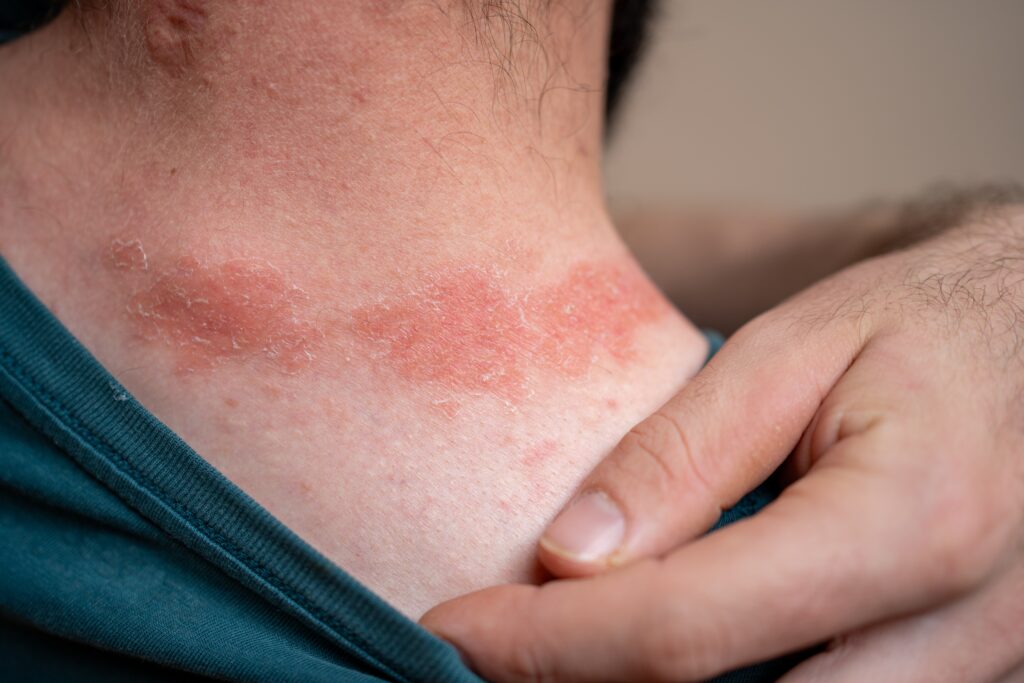
Does your eczema seem to flare up out of nowhere? One day your skin feels comfortable, and the next you’re dealing with itching, dryness, or irritated patches—even though you haven’t changed your skincare routine.
If this sounds familiar, you may be overlooking an everyday eczema trigger.
Eczema is a group of inflammatory skin conditions that can cause recurring itching, dryness, and rashes. While there isn’t always one clear reason for a flare-up, certain environmental factors, products, and daily habits can make symptoms worse.
Understanding what triggers your eczema is an important step toward managing flare-ups and keeping your skin comfortable.
What Are the Most Common Triggers for Eczema Flare-Ups?
Common eczema triggers include fragrance, harsh soaps, dry weather, heat, sweat, stress, irritating fabrics, environmental allergens, and certain skincare products. Some people may also experience flare-ups related to skin infections or specific allergies.
Eczema-prone skin often has a weakened protective barrier, making it easier for moisture to escape and irritants to enter. When the skin becomes irritated, inflammation can increase, leading to itching, dryness, and a worsening rash.
Not everyone reacts to the same triggers. Identifying what affects your skin can help you build a more effective eczema management routine.
Here are nine common culprits worth knowing.
1. Fragrances in Skincare and Household Products
That great-smelling body wash or laundry detergent might be irritating your skin.
Fragrance is a common trigger for people with eczema-prone skin, especially when the skin barrier is already compromised.
Potential sources include:
- Scented lotions and body washes
- Perfumes and fragranced body sprays
- Laundry detergents and fabric softeners
- Essential oils and fragranced skincare products
What can help: Choose products labeled fragrance-free rather than unscented. Unscented products may still contain ingredients that mask fragrance.
2. Harsh Soaps and Frequent Washing
Washing your hands, showering, and cleansing your skin are everyday necessities. However, harsh cleansers and repeated exposure to water can strip away natural oils and worsen dryness.
Hot water may also increase irritation, particularly during an active flare-up.
What can help: Use a gentle, fragrance-free cleanser, keep showers short, and choose lukewarm water instead of hot water. Apply a thick moisturizer shortly after bathing to help retain moisture.
3. Cold Weather and Dry Indoor Air
Have you noticed your eczema getting worse when temperatures drop?
Cold weather and low humidity can leave skin feeling especially dry. Indoor heating can also reduce moisture in the air, making it harder for eczema-prone skin to stay hydrated.
What can help: Moisturize consistently, especially after bathing and handwashing. A clean, properly maintained humidifier may also help when indoor air is particularly dry.
4. Heat, Sweat, and Overheating
Eczema doesn’t only flare during winter.
For some people, hot weather, sweating, and overheating can trigger itching and irritation. Sweat may sting already inflamed skin, while heat can make existing symptoms feel more uncomfortable.
What can help: Wear breathable clothing, avoid overheating when possible, and gently rinse sweat from your skin after exercise. Follow with a fragrance-free moisturizer.
5. Stress and Emotional Changes
Can stress really make eczema worse? Yes. Stress can contribute to eczema flare-ups and make itching more difficult to manage.
Eczema and stress can also create a frustrating cycle. Stress may worsen itching, while uncomfortable skin and interrupted sleep can increase stress.
What can help: Prioritize consistent sleep, incorporate stress-management activities into your routine, and follow your prescribed eczema treatment plan.
Stress isn’t the sole cause of eczema, but managing it may help reduce one factor contributing to flare-ups.
6. Scratchy Fabrics and Tight Clothing
Sometimes, what you’re wearing can make your eczema feel worse.
Wool, rough fabrics, clothing tags, and tight-fitting garments may create friction against sensitive skin. Heat and trapped sweat under clothing can add to the irritation.
What can help: Choose soft, breathable fabrics such as cotton, avoid clothing that rubs against affected areas, and wash new clothes before wearing them.
7. Environmental Allergens and Irritants
Dust mites, pollen, pet dander, mold, and other environmental exposures may contribute to eczema symptoms in some individuals.
However, having eczema doesn’t automatically mean you are allergic to these substances.
What can help: Pay attention to whether symptoms worsen after certain exposures or during particular seasons. If you suspect an allergy, a dermatology provider can help determine whether additional evaluation is appropriate.
8. Skincare Products That Are Too Harsh for Your Skin
Trying a new skincare product can be exciting, but eczema-prone skin may be more sensitive to certain ingredients.
Exfoliating acids, retinoids, fragranced products, and other potentially irritating formulas can worsen dryness or discomfort, particularly when your skin is already inflamed.
What can help: Keep your routine simple during flare-ups. Introduce new products carefully and choose gentle, fragrance-free formulas.
Wondering which ingredients may help support your skin barrier? Read our related guide, The Best Ingredients for Eczema-Prone Skin: What to Look for in a Moisturizer.
9. Allergic Reactions and Skin Infections
Sometimes, an eczema flare-up may be complicated by another skin condition.
Allergic contact dermatitis can develop when your skin reacts to a substance such as nickel, fragrance, or certain preservatives. In other cases, scratching and damage to the skin barrier may increase the risk of infection.
If your eczema suddenly becomes more painful, warm, swollen, or develops pus or yellowish crusting, contact a healthcare professional.
What can help: Avoid repeatedly experimenting with new treatments when a rash is worsening. A dermatology provider can evaluate whether you are experiencing eczema, contact dermatitis, an infection, or another condition requiring different care.
Why Does My Eczema Keep Flaring Up Even When I Use Moisturizer?
Eczema can continue to flare even with consistent moisturizing because it involves more than dry skin.
Although moisturizers help support the skin barrier, eczema—particularly atopic dermatitis—also involves inflammation and immune-system activity.
That means a good skincare routine is important, but it may not be enough to control every flare-up.
If symptoms keep returning, you may need help identifying triggers or determining whether prescription treatment is appropriate.
Learn more about eczema symptoms, causes, and treatment options at Skin Solutions Dermatology.
Can Certain Foods Trigger Eczema?
Food allergies can coexist with eczema, particularly in children with atopic dermatitis. However, food is not the cause of most eczema flare-ups, and there is no single diet that works for everyone with eczema.
Removing foods such as dairy, gluten, or eggs without medical guidance may not improve your symptoms and can create unnecessary nutritional restrictions.
If you consistently notice symptoms after eating a particular food, discuss your concerns with a healthcare professional before making significant dietary changes.
How Can You Identify Your Personal Eczema Triggers?
Because eczema triggers vary from person to person, recognizing patterns can be more helpful than trying to avoid everything at once.
Keep a Simple Eczema Flare-Up Journal
When your eczema gets worse, make a note of:
- When: Did symptoms appear after a shower, workout, or stressful day?
- Where: Are flare-ups occurring on your hands, face, elbows, or another area?
- What changed: Did you introduce a new product, detergent, or clothing item?
- Your environment: Was the weather unusually hot, cold, or dry?
- Your symptoms: Did you experience increased itching, dryness, cracking, or irritation?
Remember that some reactions can develop hours or days after exposure, so the cause may not be immediately obvious.
When Should You Ask About Allergy Testing?
If you repeatedly develop a rash after contact with certain products or materials, your provider may recommend patch testing to evaluate for allergic contact dermatitis.
Patch testing is different from testing for immediate food or environmental allergies. Not every person with eczema needs allergy testing, and your provider can help determine which evaluation, if any, is appropriate.
How Can You Help Prevent Eczema Flare-Ups?
While it may not be possible to prevent every flare-up, a consistent skincare routine and awareness of your triggers can help reduce irritation.
Your everyday eczema care checklist:
- Choose gentle, fragrance-free skincare products.
- Moisturize daily with a thick cream or ointment.
- Take short, lukewarm showers instead of hot showers.
- Apply moisturizer while your skin is still slightly damp.
- Wear soft, breathable clothing.
- Avoid known irritants whenever possible.
- Follow your dermatologist’s treatment recommendations.
The goal isn’t to create a complicated routine. It’s to find simple, sustainable habits that support your skin.
When Should You See a Dermatologist for Eczema Flare-Ups?
If eczema keeps returning despite your efforts to avoid triggers, it’s worth speaking with a dermatology provider.
Consider scheduling an appointment if:
- Your eczema frequently returns or continues to spread.
- Itching interferes with sleep or daily activities.
- Your skin becomes cracked, painful, or significantly inflamed.
- Over-the-counter products aren’t providing enough relief.
- You aren’t sure what’s triggering your symptoms.
- You suspect an allergy or another skin condition.
Seek prompt medical evaluation if you notice signs of infection, including pus, increasing pain, warmth, or honey-colored crusting. A sudden outbreak of painful, clustered blisters requires urgent medical attention.
At Skin Solutions Dermatology, our providers can evaluate recurring rashes, help identify possible triggers, and recommend an individualized treatment plan.
Ready to get your eczema under better control? Schedule an appointment with Skin Solutions Dermatology to discuss your symptoms and treatment options.
Frequently Asked Questions About Eczema Triggers
What causes eczema to suddenly flare up?
Eczema can suddenly worsen after exposure to irritants, temperature changes, sweat, stress, or other individual triggers. Sometimes, several factors contribute to a flare-up at once.
Can stress trigger eczema?
Yes. Stress can contribute to eczema flare-ups and may intensify itching. Stress management can be a helpful part of eczema care, alongside skincare and appropriate medical treatment.
Does cold weather make eczema worse?
Cold weather and dry indoor air can increase skin dryness, which may contribute to eczema flare-ups. Regular moisturizing and limiting exposure to very dry conditions can help.
Can sweating make eczema flare up?
Yes. Heat and sweat can irritate eczema-prone skin, especially during exercise or hot weather. Wearing breathable clothing and gently rinsing sweat away may help reduce irritation.
Can laundry detergent trigger eczema?
Yes. Fragrances, dyes, and other ingredients in laundry products may irritate sensitive skin. Choosing fragrance-free, dye-free detergent may help reduce exposure to potential triggers.
Can eczema flare up without an obvious trigger?
Yes. Eczema involves complex interactions between the skin barrier, immune system, and environment. A flare-up may occur without one identifiable trigger.
Are eczema flare-ups caused by food allergies?
Not usually. Although food allergies can coexist with eczema, most eczema flare-ups are not caused by food. Talk with a healthcare professional before removing foods from your diet.
How long does an eczema flare-up last?
An eczema flare-up may last several days or weeks, depending on its severity, triggers, and treatment. Persistent or worsening symptoms should be evaluated by a dermatology provider.
How do I stop eczema from coming back?
You may be able to reduce flare-ups by identifying personal triggers, moisturizing regularly, using gentle skincare products, and following an appropriate treatment plan. However, eczema is often a chronic condition, so complete prevention isn’t always possible.
Understanding Your Triggers Is the First Step Toward Better Eczema Care
Living with recurring eczema can be frustrating, especially when flare-ups seem unpredictable.
The good news is that recognizing potential triggers can help you make more informed choices about your skincare routine, environment, and everyday habits.
Whether your skin reacts to fragrance, changing weather, stress, or another factor, you don’t have to figure it out alone.
Skin Solutions Dermatology is here to help you understand your skin and explore treatment options for recurring eczema.
TEST YOUR KNOWLEDGE
How Eczema-Friendly Is Your Skincare Routine?
Think you know what eczema-prone skin needs? Test your knowledge of moisturizer ingredients, product labels, and skin-barrier care with our quick 3-question quiz.