
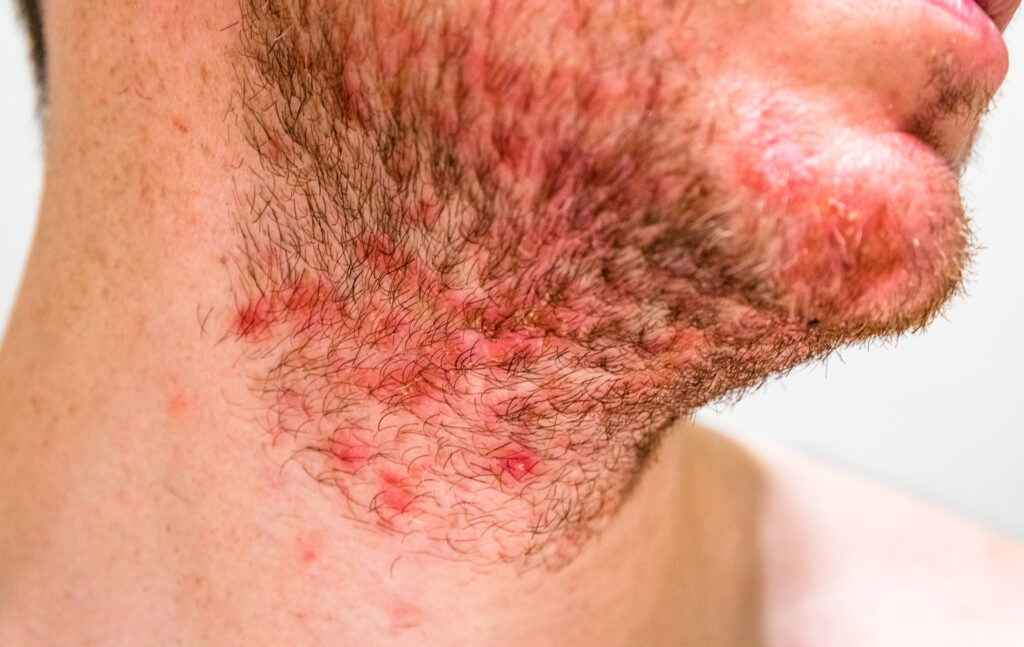
You shave, notice a few bumps, and assume you’re breaking out again.
But are they actually pimples?
Razor bumps and acne can look surprisingly similar, especially around the beard, jawline, neck, or other areas where you remove hair. Knowing what’s causing the bumps matters because acne and razor bumps don’t always need the same approach.
Here’s how to tell the difference — and what may help your skin.
Razor Bumps vs. Acne: What’s the Difference?
Razor bumps develop when cut hairs curve back into the skin and cause inflammation. Acne develops when pores become clogged with oil and dead skin cells.
One of the biggest clues is when and where your bumps appear.
If they repeatedly show up in an area after shaving, razor bumps may be the cause. If you have blackheads, whiteheads, or breakouts even when you haven’t shaved, acne may be more likely.
And yes — you can have both at the same time.
What Do Razor Bumps Look Like?
Razor bumps, medically known as pseudofolliculitis barbae (PFB), are an inflammatory reaction that can occur when short, cut hairs curve back into the skin.
They may look or feel:
Raised or inflamed
Itchy or tender
Centered around a hair
More noticeable after shaving
Accompanied by dark spots after they heal
They commonly develop around the beard and neck, but razor bumps can occur in other areas where hair is removed.
What Does Acne Look Like?
Acne starts when pores become clogged with excess oil and dead skin cells. Depending on the type of acne, you may notice:
Whiteheads
Blackheads
Pimples
Deeper, painful nodules or cysts
Unlike razor bumps, acne does not require shaving or an ingrown hair to develop.
How Can You Tell Razor Bumps From Acne?
Look at where the bumps are, when they appear, and what they look like.
Razor Bumps
Usually appear where you shave or remove hair
May develop or worsen after shaving
Can involve a hair growing back into the skin
May feel itchy, tender, or irritated
Acne
Can develop whether you shave or not
May include blackheads or whiteheads
Can occur outside areas where you remove hair
May continue between shaves
Still not sure? That’s completely normal. Several skin conditions can cause bumps that resemble acne, so appearance alone may not always tell you what’s happening.
A dermatologist can examine your skin and determine what is actually causing the bumps.
Why Do I Keep Getting Razor Bumps?
Your hair texture and shaving habits can both play a role.
Coarse or tightly curled hairs are more likely to curve back toward the skin after they’re cut, which can make razor bumps more persistent for some people.
How you shave matters, too. Shaving against the direction of hair growth, pulling the skin tight while shaving, or repeatedly irritating the area may contribute to razor bumps.
How Can You Prevent Razor Bumps?
A few changes to your shaving routine may help reduce irritation and prevent new bumps.
1. Soften Your Hair Before Shaving
Try shaving at the end of your shower or use a warm, damp washcloth beforehand. The moisture helps soften the hair before it’s cut.
2. Use Shaving Cream or Gel
Avoid shaving dry. Apply a moisturizing shaving cream or gel before you begin.
3. Shave in the Direction Your Hair Grows
Shaving against the grain may provide a closer shave, but it can also increase irritation.
4. Don’t Stretch Your Skin
Avoid pulling your skin tight while shaving, which may contribute to hairs growing back into the skin.
5. Keep Your Razor Clean and Sharp
Rinse your razor as you shave, replace disposable blades regularly, and allow your razor to dry completely between uses.
Can Shaving Cause Acne?
Shaving doesn’t necessarily cause acne, but it can irritate skin that is already acne-prone.
Shaving too aggressively or shaving directly over active blemishes can worsen irritation.
Some shaving and aftershave products may also contain ingredients that clog pores. If you’re acne-prone, look for products labeled non-comedogenic, oil-free, or “won’t clog pores.”
How Do You Treat Acne Instead?
If the bumps are acne, changing your shaving routine alone may not clear the breakout.
Depending on the type of acne, common over-the-counter ingredients may include:
Salicylic acid
Helps unclog pores and may be particularly useful for blackheads and whiteheads.
Benzoyl peroxide
Can help treat inflammatory acne and mild pimples.
Retinoids
Help unclog pores and prevent certain types of new breakouts.
Acne treatment isn’t one-size-fits-all. Using too many products at once can also irritate your skin, so more treatment isn’t always better.
Can Razor Bumps Leave Dark Spots?
Yes.
Inflammation from razor bumps can sometimes leave behind discoloration after the bump itself has healed.
This is called post-inflammatory hyperpigmentation (PIH).
If the bump is gone but the dark spot remains, read our Dermatologist’s Guide to Fading Post-Inflammatory Hyperpigmentation to learn why these marks develop and what may help them fade.
Should You Pop or Pick Razor Bumps?
Try not to.
Picking, squeezing, or digging at an ingrown hair can cause more inflammation and injury to your skin. This may make the area take longer to heal and could contribute to discoloration or scarring.
If you keep getting painful or persistent bumps, a dermatologist can help you find another approach.
When Should You See a Dermatologist for Razor Bumps or Acne?
Consider scheduling a dermatology appointment if:
Your bumps keep returning despite changing how you shave
You’re not sure whether you have acne, razor bumps, or another skin condition
Your skin is becoming painful or increasingly inflamed
You’re developing dark spots or scars
Your acne isn’t improving with over-the-counter treatment
You need to shave regularly and continue developing razor bumps
Persistent bumps don’t have to become part of your normal shaving routine.
A dermatologist can determine what’s causing them and recommend treatment based on your skin, hair, and symptoms.
Frequently Asked Questions About Razor Bumps vs. Acne
Are razor bumps the same as acne?
No. Razor bumps develop when cut hairs curve back into the skin and cause inflammation. Acne develops when pores become clogged. They can look similar, and it’s possible to have both at the same time.
How do I know if I have razor bumps or pimples?
Pay attention to location and timing. Bumps that repeatedly develop in shaved areas may be razor bumps. Blackheads, whiteheads, or breakouts that occur even when you haven’t shaved may be signs of acne.
How do I get rid of razor bumps?
Changing how you shave may help. Shaving when the hair is soft, using shaving cream, following the direction of hair growth, and avoiding stretching the skin can reduce razor bumps for some people. If they continue despite these changes, see a dermatologist.
Can shaving make acne worse?
Shaving can irritate existing acne, especially if you shave aggressively or directly over active blemishes. Using a sharp razor, shaving gently, and choosing non-comedogenic shaving products may help reduce irritation.
Should I shave if I have razor bumps?
Taking a break from shaving can allow razor bumps to improve when that is an option. If you need to shave, changing your technique may help reduce new bumps.
Can razor bumps cause dark spots?
Yes. Inflammation from razor bumps can sometimes lead to post-inflammatory hyperpigmentation, leaving a flat dark spot after the bump heals.
Why do I keep getting razor bumps?
Hair texture and shaving technique can both contribute. Coarse or tightly curled hair may be more likely to curve back into the skin after shaving. If the bumps continue despite changing your shaving routine, consider seeing a dermatologist.
Razor Bumps or Acne? You Don’t Have to Guess.
If bumps keep appearing after you shave, don’t automatically assume they’re acne.
Where the bumps appear, when they develop, and what they look like can provide important clues about what’s causing them.
If your bumps keep returning or you’re not sure what you’re dealing with, schedule an appointment with Skin Solutions Dermatology for an evaluation and personalized treatment plan.