
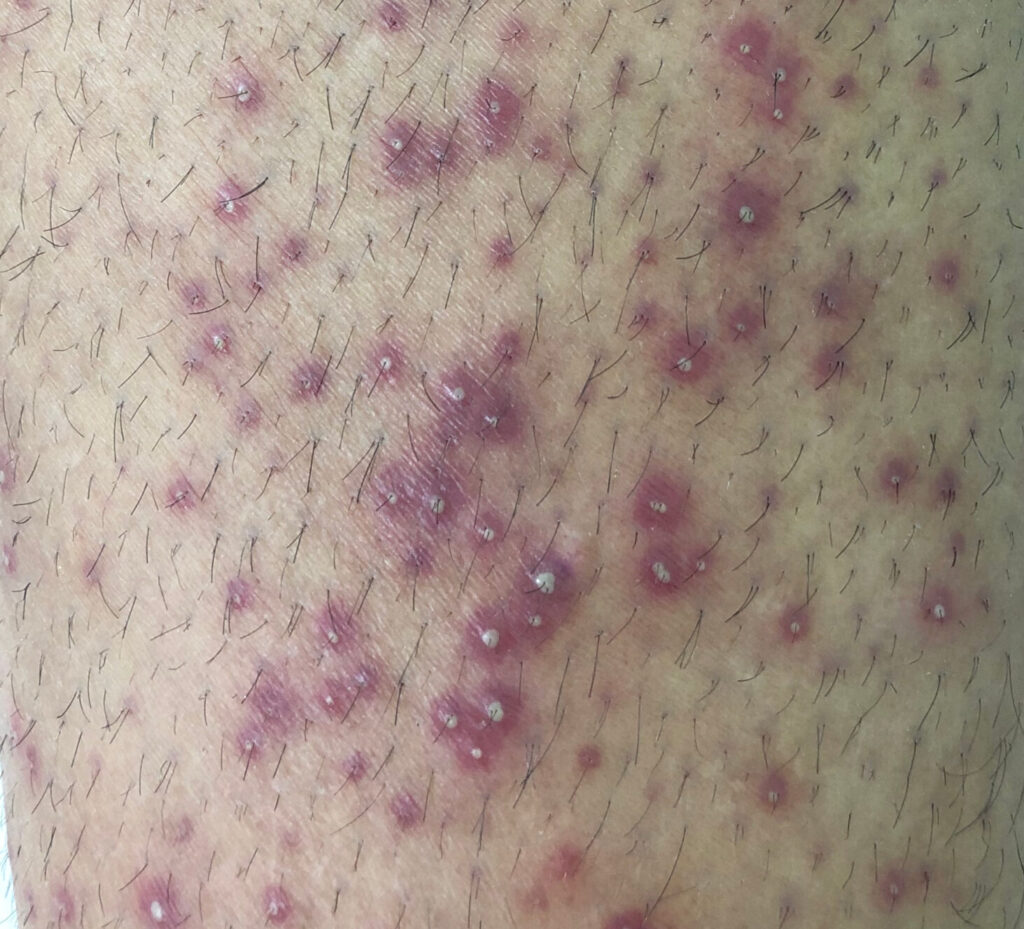
You’ve tried acne cleansers, spot treatments and maybe even prescription acne medication—but those stubborn bumps keep coming back. The problem? What looks like acne isn’t always acne.
Fungal folliculitis, sometimes called “fungal acne,” can look surprisingly similar to a traditional breakout. But because the two conditions have different causes, treating fungal folliculitis like regular acne may not give you the results you expect.
What Is Fungal Folliculitis?
Fungal folliculitis, also called Malassezia folliculitis, develops when Malassezia yeast overgrows within the hair follicles.
Malassezia normally lives on the skin, but certain conditions can encourage overgrowth. Heat, humidity, sweating, oily or occlusive products and antibiotic use are among the factors associated with fungal folliculitis.
It commonly appears on the forehead, hairline, chest, shoulders and upper back.
Fungal Folliculitis vs. Acne: How Can You Tell the Difference?
At first glance, they can look very similar. A few clues may help distinguish them.
Fungal folliculitis may:
- Cause small bumps that look very similar in size
- Feel itchy
- Appear in clusters
- Affect the forehead, chest, shoulders or upper back
- Occur without blackheads or typical clogged pores
Acne may:
- Include different types and sizes of blemishes
- Cause blackheads and whiteheads
- Include pimples, pustules, nodules or cysts
- Develop when pores become clogged with oil and dead skin cells
Because several skin conditions can cause acne-like bumps, appearance alone isn’t always enough to determine what you have.
Why Do the Bumps Keep Coming Back?
If you’ve been treating your skin for acne without improvement, you may be treating the wrong condition.
Fungal folliculitis and acne require different approaches. In some cases, antibiotic use can even contribute to Malassezia overgrowth.
Fungal folliculitis can also recur, particularly when triggers such as heat, sweat and moisture remain.
How Is Fungal Folliculitis Treated?
Treatment depends on an accurate diagnosis.
A dermatologist can examine your skin and determine whether your bumps are caused by acne, fungal folliculitis or another condition that looks similar.
When Malassezia folliculitis is diagnosed, treatment may include topical or oral antifungal medication. Acne treatment, on the other hand, is selected based on the type and severity of acne.
That’s why getting the diagnosis right matters before simply adding another acne product to your routine.
When Should You See a Dermatologist?
Consider scheduling a dermatology appointment if your “acne”:
- Keeps returning despite treatment
- Is especially itchy
- Consists of many small, similar-looking bumps
- Gets worse with heat or sweating
- Appears frequently on your chest, shoulders or back
The takeaway: Persistent bumps don’t always mean stubborn acne. If your breakouts aren’t responding the way you expect, a dermatologist can help determine what’s actually causing them and recommend the right treatment.
Tired of treating bumps that keep coming back? Schedule an appointment with Skin Solutions Dermatology for an evaluation and treatment plan.
Frequently Asked Questions About Fungal Folliculitis vs. Acne
Is fungal folliculitis the same as fungal acne?
Yes. “Fungal acne” is the common nickname for Malassezia folliculitis (fungal folliculitis). Despite the name, it is not actually acne. It occurs when Malassezia yeast overgrows in the hair follicles, causing small, acne-like bumps that may be itchy.
How can you tell the difference between fungal folliculitis and acne?
Fungal folliculitis often causes small, similar-looking bumps that may be itchy and appear in clusters. Acne can include different types of blemishes, including blackheads, whiteheads, pimples and deeper lesions. Because the conditions can look similar, a dermatologist can provide an accurate diagnosis.
Why does fungal folliculitis keep coming back?
Fungal folliculitis can recur, especially when factors that encourage Malassezia overgrowth—such as heat, sweating and moisture—continue. If bumps repeatedly return despite acne treatment, a dermatologist can help determine the cause and appropriate treatment.
How is fungal folliculitis treated?
Fungal folliculitis may be treated with topical or oral antifungal medication, depending on the individual case. Because fungal folliculitis and acne require different treatment approaches, getting the correct diagnosis is important before starting treatment.