
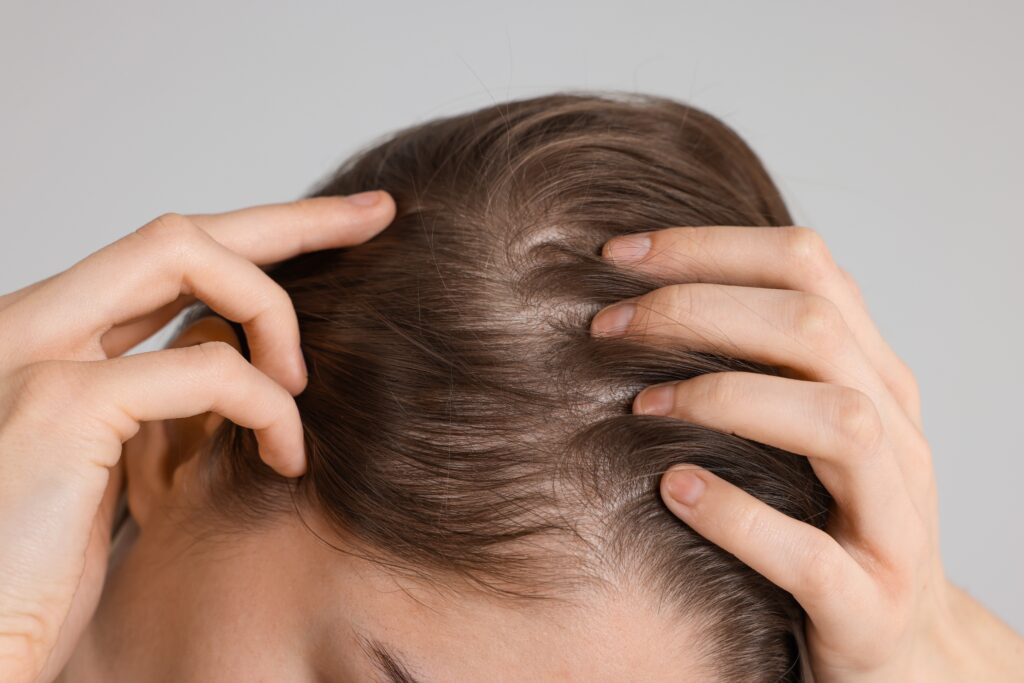
If you’re noticing more hair in your shower, brush, or along your part, you may be wondering whether something in your daily supplement routine is contributing.
The answer might surprise you: both too little and too much of certain nutrients can affect your hair.
While nutritional deficiencies can contribute to hair loss, excessive amounts of certain vitamins and minerals—including vitamin A and selenium—have also been associated with shedding.
Before adding another “hair, skin & nails” supplement, it may be worth looking at what you’re already taking.
Can Vitamins and Supplements Cause Hair Loss?
Yes. Certain vitamins and minerals can contribute to hair loss when taken in excessive amounts, while deficiencies in other nutrients can interfere with healthy hair growth.
This is why taking more vitamins isn’t necessarily better for your hair.
If you’re experiencing unexplained shedding or thinning, identifying the cause should come before adding supplements.
Which Vitamins and Supplements Can Cause Hair Loss?
Vitamin A: Vitamin A is essential for your health, but excessive intake—particularly from high-dose supplements—has been associated with hair loss.
Check whether you’re getting vitamin A from multiple sources, such as a multivitamin plus a separate hair or beauty supplement.
Should you remove it? Not automatically. Vitamin A is necessary for your body. The concern is unnecessary excessive intake.
Selenium: Selenium is another nutrient where more isn’t better.
Chronically consuming excessive selenium can cause selenosis, which can include hair loss and brittle or lost nails.
If you’re taking a multivitamin plus a hair supplement, check both labels to see whether you’re unknowingly doubling up.
Vitamin E: Vitamin E frequently appears in beauty supplements, but excessive intake has also been linked to hair loss.
Rather than focusing on one bottle, look at your total daily intake across all supplements.
Does Biotin Actually Help Hair Grow?
Biotin may be one of the most recognizable “hair vitamins,” but more biotin doesn’t automatically mean more hair growth.
Biotin deficiency can cause thinning hair, but true deficiency is rare. Evidence supporting biotin supplements for improving hair in otherwise healthy people is limited.
High-dose biotin can also interfere with certain laboratory tests and produce inaccurate results.
If you’re taking biotin, tell your healthcare provider—especially before having bloodwork performed.
What Vitamins Should I Take for Hair Loss?
There’s no universal list of supplements everyone with hair loss should take.
The goal is to correct a deficiency if one exists—not supplement everything associated with hair growth.
Depending on your medical history, diet, and symptoms, a healthcare professional may evaluate nutrients such as:
- Iron: Iron deficiency can contribute to hair loss.
- Zinc: Inadequate zinc can also be associated with hair loss.
- Protein: Inadequate protein or calorie intake can affect normal hair growth.
- Other nutrients: Additional testing may be appropriate depending on your individual health history.
Don’t start iron or other high-dose supplements solely because you’re experiencing shedding. Too much of certain nutrients can cause health problems of their own.
Should I Take Vitamin D for Hair Loss?
Vitamin D is frequently discussed online in connection with hair loss, but having hair loss doesn’t automatically mean you’re vitamin D deficient.
Different forms of alopecia have different causes. If your healthcare provider suspects a deficiency, they can determine whether testing and supplementation are appropriate.
Can Hair Growth Gummies Make Hair Fall Out?
The words “hair growth” on a bottle don’t guarantee that a product is appropriate for your type of hair loss.
Hair gummies and beauty supplements may contain several vitamins and minerals, sometimes overlapping with ingredients in your multivitamin or other supplements.
Try a quick supplement-stack check:
- Multivitamin
- Hair, skin & nail gummies
- Beauty powders
- Standalone vitamins
- Protein or nutrition supplements
Then compare the labels.
Are you taking the same nutrient in two or three different products?
That’s an important question to bring to your healthcare provider.
What Supplements Should I Stop Taking If My Hair Is Falling Out?
Don’t automatically stop a supplement prescribed or recommended for a medical reason.
Instead, review your complete supplement list with your healthcare provider, particularly if you’re taking:
- High-dose vitamin A
- Selenium
- High-dose vitamin E
- High-dose biotin
- Multiple multivitamins
- Hair, skin & nail supplements
Your provider can determine whether you’re taking an unnecessary or excessive amount.
What If My Vitamins Aren’t Causing My Hair Loss?
Hair loss has many potential causes—and supplements are only one possibility.
Other causes can include genetics, stress, illness, hormonal changes, certain medications, autoimmune conditions, inflammatory scalp disorders, and repeated tension on the follicles.
The pattern of your hair loss can provide important clues.
For example:
Sudden shedding throughout the scalp → may occur with telogen effluvium.
Thinning around your edges → may warrant evaluation for traction alopecia.
Thinning beginning at the crown → can occur with several conditions, including CCCA.
Round or oval bald patches → can occur with alopecia areata.
This is why treating hair loss starts with determining why it’s happening.
When Should I See a Dermatologist for Hair Loss?
Consider scheduling an evaluation if you notice:
- Sudden or excessive shedding
- A widening part
- Progressive thinning
- Thinning around your hairline or edges
- Bald patches
- Persistent scalp itching, burning, pain, or redness
- Smooth or shiny areas of scalp
A dermatologist can evaluate your hair-loss pattern, health history, medications, supplements, and other potential causes.
Frequently Asked Questions
Can too many vitamins cause hair loss?
Yes. Excessive intake of certain nutrients, including vitamin A, vitamin E, and selenium, has been associated with hair loss.
What vitamin deficiencies can cause hair loss?
Deficiencies or inadequate intake of nutrients such as iron, zinc, and protein can contribute to hair loss. However, hair loss alone cannot tell you which nutrient—if any—you’re deficient in.
Does biotin help hair loss?
Biotin is important when someone is genuinely deficient, but deficiency is rare and evidence supporting additional biotin for hair growth in otherwise healthy people is limited.
Can too much vitamin A cause hair loss?
Yes. Excessive vitamin A intake has been associated with hair loss.
Can too much selenium cause hair loss?
Yes. Chronic excessive selenium intake can cause selenosis, which can include hair loss and nail changes.
Should I take iron for hair loss?
Not without knowing whether you need it. Iron deficiency can contribute to hair loss, but supplementation should be based on your individual needs and healthcare provider’s recommendations.
Before You Add Another Hair Supplement…
When your hair starts shedding, buying another supplement may feel like an easy first step—but your hair loss needs a diagnosis before it needs another vitamin.
You may need to correct a deficiency. You may be taking more of a nutrient than you realize. Or your supplements may have nothing to do with your hair loss.
Noticing increased shedding or thinning? Schedule a hair and scalp evaluation with Skin Solutions Dermatology to identify the cause and determine the right next step.