
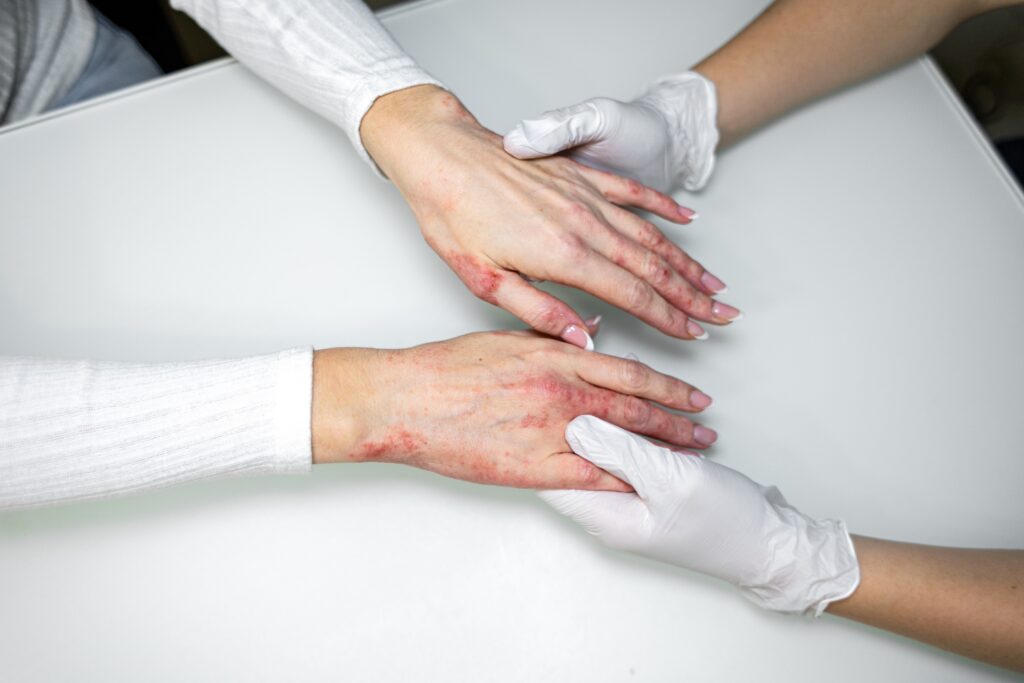
You’ve switched to fragrance-free skincare, stocked up on thick moisturizers, and tried an over-the-counter eczema cream. But the itching keeps coming back, and your skin still feels irritated. Sound familiar?
Over-the-counter (OTC) treatments can help manage mild eczema symptoms, but they aren’t always enough to control ongoing inflammation. If your eczema keeps flaring despite your best efforts, it may be time to explore other treatment options.
So, when should you see a dermatologist for eczema? If your symptoms aren’t improving with consistent at-home care, keep returning, interrupt your sleep, or affect your daily activities, a dermatology provider can help identify the cause and recommend a more effective treatment plan.
Why Aren’t Over-the-Counter Eczema Treatments Working?
Eczema isn’t simply dry skin. It’s a group of inflammatory skin conditions that can affect your skin’s protective barrier and cause itching, irritation, and recurring rashes.
Moisturizers help protect the skin barrier, while OTC hydrocortisone creams may temporarily reduce mild inflammation. However, these products don’t always address the underlying causes of persistent eczema.
Your current treatment may not be working because:
- The inflammation is too severe. Some eczema flare-ups require prescription-strength treatment.
- You’re still encountering a trigger. Fragrances, detergents, allergens, sweat, and environmental changes may contribute to recurring irritation.
- You have a different type of eczema. Atopic dermatitis and contact dermatitis, for example, may require different approaches.
- The rash isn’t eczema. Conditions such as psoriasis, fungal infections, and other skin disorders can sometimes resemble eczema.
- Your skin needs a different treatment approach. Managing persistent eczema often requires both daily skincare and targeted medical treatment.
If you’ve been applying moisturizer consistently but your skin isn’t improving, a dermatology provider can help determine what’s missing from your routine.
6 Signs It’s Time to See a Dermatologist for Eczema
Not every eczema flare-up requires a prescription. However, certain symptoms suggest that over-the-counter treatment may no longer be enough.
1. Your Eczema Keeps Coming Back
Does your skin improve for a few days, only for the same itchy patches to return?
Recurring flare-ups may indicate that inflammation isn’t fully controlled or that you’re repeatedly encountering a trigger.
A dermatology provider can evaluate your symptoms, help identify contributing factors, and recommend a plan focused on longer-term management.
2. Your Skin Isn’t Improving With OTC Treatments
If you’re regularly using fragrance-free moisturizers and other appropriate OTC products without meaningful improvement, it’s worth scheduling an evaluation.
A provider can determine whether prescription medication, changes to your skincare routine, or additional testing may help.
3. The Itching Is Affecting Your Sleep
Eczema itching can become especially uncomfortable at night.
If you’re waking up scratching, struggling to fall asleep, or noticing that your symptoms interfere with work and everyday activities, you don’t have to wait for your eczema to become more severe before seeking help.
Controlling inflammation and breaking the itch-scratch cycle are important parts of eczema treatment.
4. Your Eczema Is Spreading or Becoming More Painful
Eczema can affect different areas of the body, including the hands, face, neck, arms, and legs.
If patches are spreading, cracking, bleeding, or becoming increasingly uncomfortable, professional evaluation can help determine whether your current treatment needs to change.
5. You Notice Signs of a Skin Infection
Scratching can damage the skin barrier and increase the risk of infection.
Warning signs may include:
- Yellow or honey-colored crusting
- Pus or drainage
- Increasing pain, warmth, or swelling
- Rapidly worsening redness or discoloration
Contact a healthcare professional promptly if you notice possible infection. Fever, rapidly spreading symptoms, or clusters of painful blisters require urgent medical evaluation.
6. You’re Not Sure What’s Triggering Your Eczema
Sometimes the most frustrating part of eczema is not knowing why it keeps happening.
A rash that repeatedly appears after using certain products or wearing specific materials could indicate contact dermatitis.
A dermatology provider can review your symptoms, evaluate potential triggers, and determine whether additional testing, such as patch testing, may be appropriate.
When Should You Stop Trying to Treat Eczema at Home?
If your eczema isn’t improving with consistent over-the-counter care, keeps returning, or begins affecting your comfort and daily activities, it’s time to consider professional evaluation.
You don’t have to wait until your symptoms become severe. A dermatology provider can evaluate your skin, help determine whether eczema or another condition is causing your symptoms, and discuss appropriate next steps.
The sooner you understand what’s contributing to recurring irritation, the sooner you can work toward managing it.
Frequently Asked Questions About Eczema Triggers
How long should I try over-the-counter eczema treatments before seeing a dermatologist?
If your eczema isn’t improving after one to two weeks of consistent, appropriate over-the-counter care, consider scheduling a dermatology appointment. Seek care sooner if symptoms are worsening, spreading, becoming painful, or interfering with sleep. Some products, including OTC hydrocortisone, have specific limits on how long they should be used without medical guidance.
Why does my eczema keep coming back after using hydrocortisone?
Hydrocortisone can temporarily reduce inflammation, but it may not address ongoing triggers or other factors contributing to recurring flare-ups. If your eczema repeatedly returns after treatment, a dermatology provider can help determine why your symptoms aren’t staying under control.
Can eczema get worse if left untreated?
Yes. Uncontrolled eczema can lead to persistent itching, scratching, cracked skin, and an increased risk of skin infections. Repeated inflammation may also cause changes in skin texture or discoloration. Seeking appropriate care can help reduce complications and improve symptom management.
How do I know if my rash is eczema or something else?
Eczema often causes itchy, dry, inflamed skin, but other conditions, including psoriasis, contact dermatitis, and fungal infections, can look similar. A dermatology provider can examine your skin and help determine what’s causing your symptoms, especially if the rash isn’t responding to your usual skincare routine.
When is eczema considered a medical emergency?
Eczema itself is rarely an emergency, but certain symptoms require urgent attention. Seek prompt medical evaluation for fever, rapidly spreading redness or swelling, increasing pain, or signs of infection. A rapidly worsening rash with clusters of painful blisters, especially near the eyes, needs urgent evaluation.
Is It Time to See a Dermatologist for Eczema?
You’ve tried the creams and moisturizers, but do you know when eczema needs professional attention? Test your knowledge!
When OTC Eczema Treatments Aren’t Enough, We’re Here to Help
Managing eczema can be frustrating, especially when you’ve tried different moisturizers, switched skincare products, and still experience recurring flare-ups.
At Skin Solutions Dermatology, our providers evaluate eczema and other inflammatory skin conditions to help patients better understand their symptoms and determine appropriate next steps.
If your eczema isn’t improving with at-home care, you don’t have to keep guessing.
Learn More About Eczema Care at Skin Solutions Dermatology →