
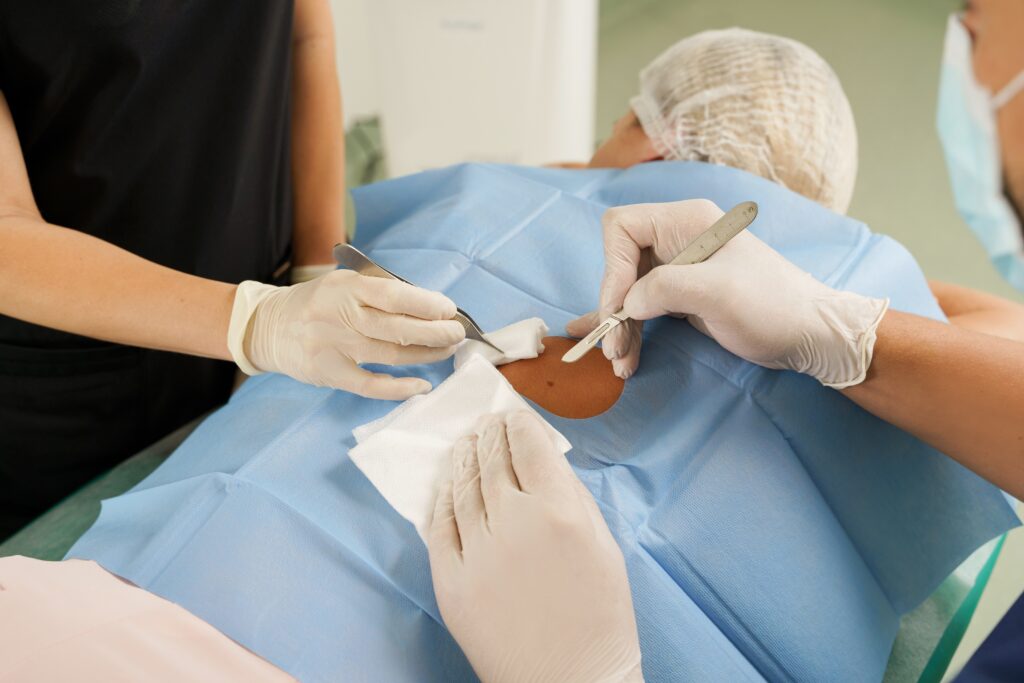
What is Mohs surgery and why is it used?
Mohs surgery is a precise, micrographic surgical technique used to treat skin cancer. During the procedure, a specialized surgeon removes skin cancer layer by layer, examining each layer under a microscope in real-time until only cancer-free tissue remains. It is considered the gold standard for treating basal cell carcinoma (BCC) and squamous cell carcinoma (SCC) because it offers the highest cure rate (up to 99%) while sparing the maximum amount of healthy surrounding skin.
Why is Mohs surgery called the gold standard for skin cancer?
When you or a loved one receives a skin cancer diagnosis, the immediate priority is finding a treatment that completely eradicates the disease while minimizing scarring. This is why dermatologists universally point to Mohs micrographic surgery.
Unlike traditional excisions, where a doctor cuts out the visible tumor along with a wide margin of healthy skin and sends it to an off-site lab, Mohs surgery completes the entire removal and lab analysis in a single visit.
Statistically, Mohs surgery delivers an unmatched success rate:
Up to 99% for a newly diagnosed skin cancer.
Up to 94% for a skin cancer that has recurred after previous treatments.
How does the Mohs micrographic surgery process work?
The thought of undergoing skin cancer surgery can be anxiety-inducing, but understanding the highly controlled, step-by-step clinical process can replace that uncertainty with peace of mind. The procedure is performed under local anesthesia and follows a precise cycle:
The Layer Removal: The Mohs surgeon removes the visible tumor along with a very thin layer of tissue surrounding it.
Mapping the Tumor: The removed tissue is color-coded with dyes and a highly detailed map is drawn. This map matches the tissue sample exactly to the surgical site on your body.
Microscopic Examination: While you wait comfortably with the wound bandaged, the surgeon processes the tissue in an on-site laboratory. The edges and underside of the sample are examined under a microscope.
Targeted Clearance: If the surgeon sees cancer cells at any edge of the map, you return to the room, and only the specific area with remaining cancer is excised.
This process repeats until the microscope shows a 100% cancer-free margin. View our approach on Mohs Surgery here.
Which types of skin cancer are treated with Mohs surgery?
Mohs surgery is not used for every single type of skin spot, but it is highly targeted for specific high-risk scenarios. It is most commonly recommended for:
Basal Cell Carcinoma (BCC) & Squamous Cell Carcinoma (SCC): The two most prevalent forms of non-melanoma skin cancer.
Critical Aesthetic Zones: Cancers located on the face, nose, eyelids, lips, ears, scalp, hands, or feet, where preserving every millimeter of healthy tissue is crucial to prevent cosmetic disfigurement.
Aggressive or Large Cancers: Tumors that are growing rapidly, have ill-defined borders, or have returned after previous treatments
Common Patient Questions: What should I expect during Mohs recovery?
A trending topic among patients preparing for surgery is the healing process and scar mitigation.
Does Mohs surgery leave a scar?
Because Mohs surgery removes the absolute minimum amount of healthy tissue required to clear the cancer, it naturally results in the smallest possible scar. Once the site is completely cancer-free, your surgeon will discuss the best method for repair, which may include letting it heal naturally, closing it with stitches, or performing a small skin flap or graft to ensure optimal cosmetic results.
How long does Mohs surgery take?
The surgery itself takes very little time, but the laboratory processing takes roughly an hour per layer. Patients should expect to spend a few hours at the clinic. It is a highly efficient “one-stop shop” that eliminates the days of agonizing anxiety spent waiting for traditional pathology results to return.
Partner with Expert Skin Cancer Care
Receiving a skin cancer diagnosis can feel overwhelming, but utilizing the most precise clinical framework available changes the trajectory of your recovery.
Our Clinical Recommendations for SPF Protection:
EltaMD UV Clear Broad-Spectrum SPF 46: Our top recommendation for acne and rosacea. It contains niacinamide to calm redness while the zinc oxide protects.
EltaMD UV Clear Tinted: Perfect for those who want a sheer “glow” without the weight of a traditional foundation. The tint helps blend mineral blockers seamlessly into all skin tones.
EltaMD UV AOX Elements Broad-Spectrum SPF 50: This 100% mineral sunscreen is a powerhouse for aging and sensitive skin. It combines Zinc Oxide and Titanium Dioxide with a blend of antioxidants (Vitamins E and C) to help neutralize free radicals while providing a sheer, universal tint that masks redness.