
Quick Summary: Seborrheic dermatitis is a common inflammatory condition causing flaky, greasy scales in areas rich in oil glands. It is an overreaction to a common skin yeast; management focuses on reducing yeast levels and calming inflammation through specialized hygiene.
Why Is My Skin Red and Flaky?
Our skin is home to a common fungus called Malassezia yeast. In most people, it’s harmless, but for those with seborrheic dermatitis, the immune system launches an inflammatory response, leading to redness and greasy scales.
Podcast:
Learn More About Seborrheic Dermatitis
Understanding the Two Groups: Infants vs. Adults
| Group | Key Characteristics |
|---|---|
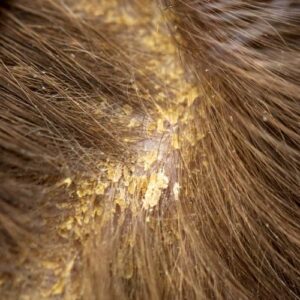
| Infants (“Cradle Cap”) | Yellowish scales on the scalp. Usually resolves on its own within months. |
| Adults (“Dandruff”) | Flaky scales on the face and scalp. Often a chronic condition that flares with stress. |
Am I at risk for seborrheic dermatitis?
This condition is not a reflection of hygiene but a biological sensitivity to skin oils and yeast.
- Oily Skin Type: Higher oil production provides more “food” for the yeast.
- Stress & Fatigue: Powerful triggers for adult flares.
- Winter Weather: Cold, dry air often worsens the condition.
Where and How It Appears on My Body
- The Scalp: Dandruff or thick, matted scales.
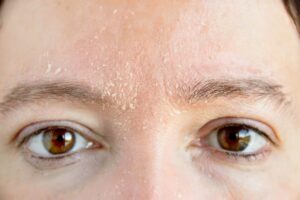
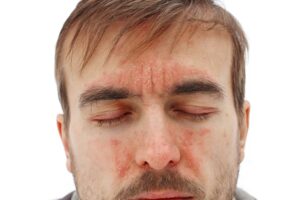
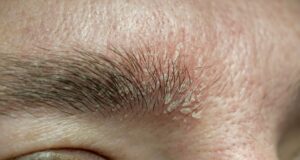
- The Face: Eyebrows, bridge of the nose, and smile lines.
- The Chest: Red, scaly patches in the center of the chest.
Solutions I Can Try at Home
- Medicated Shampoos: Use products with ketoconazole or zinc pyrithione. Leave suds on for 5 minutes before rinsing.
- Gentle Scale Removal: For infants, soften scales with mineral oil before gently brushing away.
- Facial Care: Wash oily areas daily with a mild cleanser and apply lightweight, fragrance-free moisturizer.
When Should I See a Dermatology Provider?
Seek Professional Help if You Notice These “Red Flags”:
- Treatment Failure: Shampoos provide no relief after 4 weeks.
- Signs of Infection: Pus, pain, or significant oozing.
- Widespread Rash: Condition spreading to large areas of the body or skin folds.
Frequently Asked Questions
- Q: Is it contagious?
A: No. The yeast involved lives on everyone’s skin. - Q: Will it cause hair loss?
A: Generally no; hair typically regrows once the inflammation is controlled.
Success in managing seborrheic dermatitis lies in a consistent routine that addresses both the yeast and the inflammation. By understanding your “oil map,” clear skin is a sustainable goal.