
Quick Summary: Dyshidrotic eczema (vesicular hand eczema) is a condition causing tiny, deep-seated, intensely itchy blisters on the palms, soles, and sides of fingers. The most effective management involves protecting the skin from moisture, managing stress triggers, and working with a dermatology provider to calm the unique inflammatory response.
What Is Causing These Tiny Blisters?
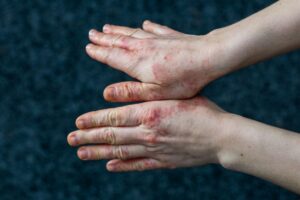
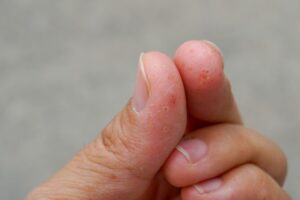
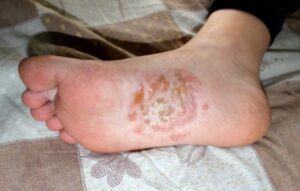
Recognizing the unique patterns of your hands and feet is a strategic first step in managing dyshidrotic eczema. While most eczema presents as a surface rash, dyshidrotic eczema occurs deep within the thick skin of our extremities. Because the skin here is so sturdy, the blisters don’t pop easily; instead, they feel like tiny, hard “tapioca” pearls under the surface.
Podcast:
Learn More About Dyshidrotic Eczema
The Two Phases: Blistering vs. Peeling
| Stage | Key Differentiators |
|---|---|
| Active Phase | Appearance: Tiny fluid-filled blisters (vesicles). Feeling: Intense itching or burning. |
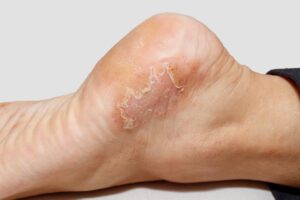
| Healing Phase | Appearance: The blisters dry out and the skin begins to peel or develop painful cracks (fissures). |
Am I at risk for dyshidrotic eczema?
If you are struggling with recurring hand or foot blisters, remember that this condition is not caused by poor hygiene. It is often a reflection of environmental and internal stressors.
- Environmental Exposure: Frequent hand washing or hands that are often wet.
- Stress: High emotional stress is one of the most well-documented triggers.
- Metal Sensitivity: Contact with nickel, chromium, or cobalt.
Where and How It Appears on My Body
- The Hands: Most commonly on the palms and the sides of the fingers.
- The Feet: On the soles and sides of the toes.
- Telltale “Tapioca”: Small, deep-seated blisters with no surrounding redness in the early stages.
Solutions I Can Try at Home
- Minimize Water Exposure: Use lukewarm water and wear cotton-lined waterproof gloves for wet work.
- Heavy Barrier Repair: Use thick, petroleum-based ointments rather than lotions.
- Cooling Relief: Apply cool, damp compresses for 15 minutes to soothe the intense itch.
When Should I See a Dermatology Provider?
Seek Professional Help if You Notice These “Red Flags”:
- Secondary Infection: You notice pus, severe pain, swelling, or spreading redness.
- Deep Fissures: The skin is cracking so deeply that it is bleeding or too painful to walk.
- Severe Disruption: The itch is so constant it interferes with your work or sleep.
Frequently Asked Questions
- Q: Should I pop the blisters?
A: No. Popping them increases the risk of infection and more severe skin damage. - Q: Is it caused by sweat?
A: No, it is an inflammatory reaction, though excessive sweat can be a trigger.
Dyshidrotic eczema can be frustrating because of its location, but with consistent protection and the right treatment plan, it is highly manageable. Identifying your unique triggers is the key to long-term clearance.