
Yes, traction alopecia can often grow back when it is identified early and the pulling force is removed. However, repeated tension can eventually scar and permanently damage the hair follicles. The sooner you change the hairstyle causing the tension and seek professional care, the better the chance of preserving and regrowing your hair.
Traction alopecia is hair loss caused by repeated or prolonged pulling on the hair follicles. It commonly affects the hairline, temples, sides of the scalp, and sometimes the back of the head. Tight ponytails, buns, braids, cornrows, locs, weaves, extensions, rollers, clips, and tight headbands can all contribute.
The condition is largely preventable, but there is an important catch: early traction alopecia and advanced traction alopecia do not behave the same way. In the early stages, the follicle is stressed but may still be capable of producing hair. Continued tension can lead to fibrosis, meaning healthy follicles are replaced by scar tissue. Once that happens, the loss may be permanent.
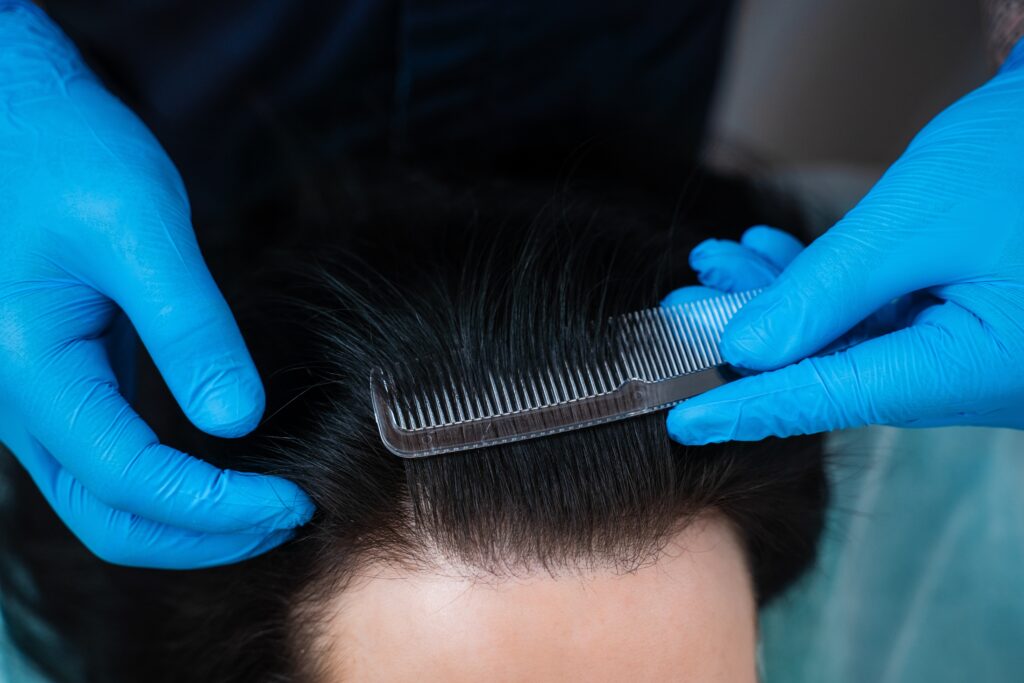
Early detection saves lives. While self-exams are an excellent habit, they cannot replace the trained eye and specialized tools of a board-certified dermatology provider.
What are the early signs of traction alopecia?
Traction alopecia may begin before obvious bald spots appear. Early warning signs include:
- Tenderness, itching, or irritation after styling
- Redness or bumps around the hair follicles
- Scaling or inflammation
- Short, broken hairs near the hairline
- Thinning around the temples or edges
- Small white or brown sleeves around individual hairs, sometimes called hair casts
One distinctive sign is the fringe sign. This occurs when a thin rim of hair remains along the very front of the hairline while the hair immediately behind it becomes noticeably thinner. A dermatologist may use this pattern to help distinguish traction alopecia from other causes of hair loss.
Which hairstyles are most likely to cause traction alopecia?
Any hairstyle that repeatedly pulls the hair tightly can place the follicles under stress. Common examples include:
- Slicked-back ponytails
- Tight buns
- Braids and cornrows
- Locs
- Sew-in weaves
- Hair extensions
- Tight headbands
- Styles that pull heavily on the edges
The risk increases when a tight hairstyle is combined with chemical processing or excessive heat. Chemical relaxers can weaken the hair shaft, making it less able to tolerate tension. This combination creates what the provider learning material describes as a “double hit”: weakened strands plus repeated mechanical pulling.
How do I know whether my traction alopecia is reversible?
Traction alopecia is more likely to be reversible when:
- The thinning has started recently
- The scalp still has visible follicular openings
- Fine or short hairs remain in the affected area
- There is breakage rather than a completely smooth bald patch
- The pulling hairstyle is stopped early
It may be less likely to fully regrow when:
- The affected skin looks smooth or shiny
- The follicular openings are no longer visible
- The area has been thinning for years
- Tight styling has continued despite pain, bumps, or breakage
- Scar tissue has replaced the follicles
A smooth or shiny scalp can be a warning sign of scarring, but it is not possible to determine the exact stage from appearance alone. A dermatologist can examine the scalp with magnification and determine whether additional testing is needed.
How long does traction alopecia take to grow back?
There is no single timeline because regrowth depends on the severity and duration of the damage.
After the tension is removed, some people begin noticing early improvement over several months. Full visible recovery may take longer because hair grows slowly. If inflammation is active, treatment may be needed before healthy growth can resume.
Hair that does not begin to recover after several months of hairstyle modification should be evaluated by a dermatologist. Other conditions—including alopecia areata, androgenetic alopecia, telogen effluvium, CCCA, and frontal fibrosing alopecia—can sometimes resemble traction-related thinning.
What should I do first if I think I have traction alopecia?
The first step is to remove or reduce the source of tension.
Choose looser styles, alternate where you place ponytails or buns, and avoid pulling delicate hairs along the edges into braids or extensions. Do not continue wearing a style that causes pain, stinging, headaches, bumps, or immediate scalp tenderness.
Helpful changes may include:
- Wearing loose, low-tension styles
- Leaving the edges out of braids or weaves
- Avoiding heavy extensions
- Taking breaks between tension-heavy styles
- Reducing chemical relaxers and excessive heat
- Using gentle hair ties without metal components
- Avoiding styling wet hair under tension
Current hair trends are increasingly emphasizing low-tension styles and reduced manipulation, reflecting growing awareness that a hairstyle can look polished without placing the scalp under constant stress.
Can minoxidil treat traction alopecia?
A dermatologist may recommend topical minoxidil in some cases to support hair growth, but it does not replace the need to remove the pulling force.
Depending on the condition of the scalp, treatment may also include anti-inflammatory medication, topical corticosteroids, corticosteroid injections, or other therapies. Advanced scarring may not respond to growth treatments because the follicle itself has been destroyed. In medically stable cases, surgical hair restoration may sometimes be considered.
Do not assume every case of thinning edges needs the same treatment. A correct diagnosis matters because medications used for one type of hair loss may not address another.
When should I see a dermatologist for traction alopecia?
Schedule an evaluation when you notice:
- Progressive thinning around the hairline
- Pain, burning, itching, or bumps
- Hair loss that continues after changing hairstyles
- Smooth or shiny areas of scalp
- Loss of eyebrows or hair elsewhere
- Sudden or patchy hair loss
- Uncertainty about whether the condition is traction alopecia
Early evaluation is especially important because the goal is not only to regrow hair. It is also to prevent stressed follicles from becoming permanently scarred.
Concerned about thinning edges, breakage, or hairline recession? Schedule a hair and scalp evaluation with a dermatology provider to identify the cause and create a treatment plan.