
The Disclaimer: Before we dive in, a reminder: Routine Building and Discipline is about functional health, not aesthetic perfection. It is a common misconception that “clear” skin is the only sign of well-being. In reality, a resilient skin foundation can exist alongside breakouts, and “clear” skin can be under significant biological stress. Our goal is to help you understand your body’s signals so you can focus on showing up for your life, not just your reflection.
Reading the Internal Map: Common Skin Signs of Health Issues
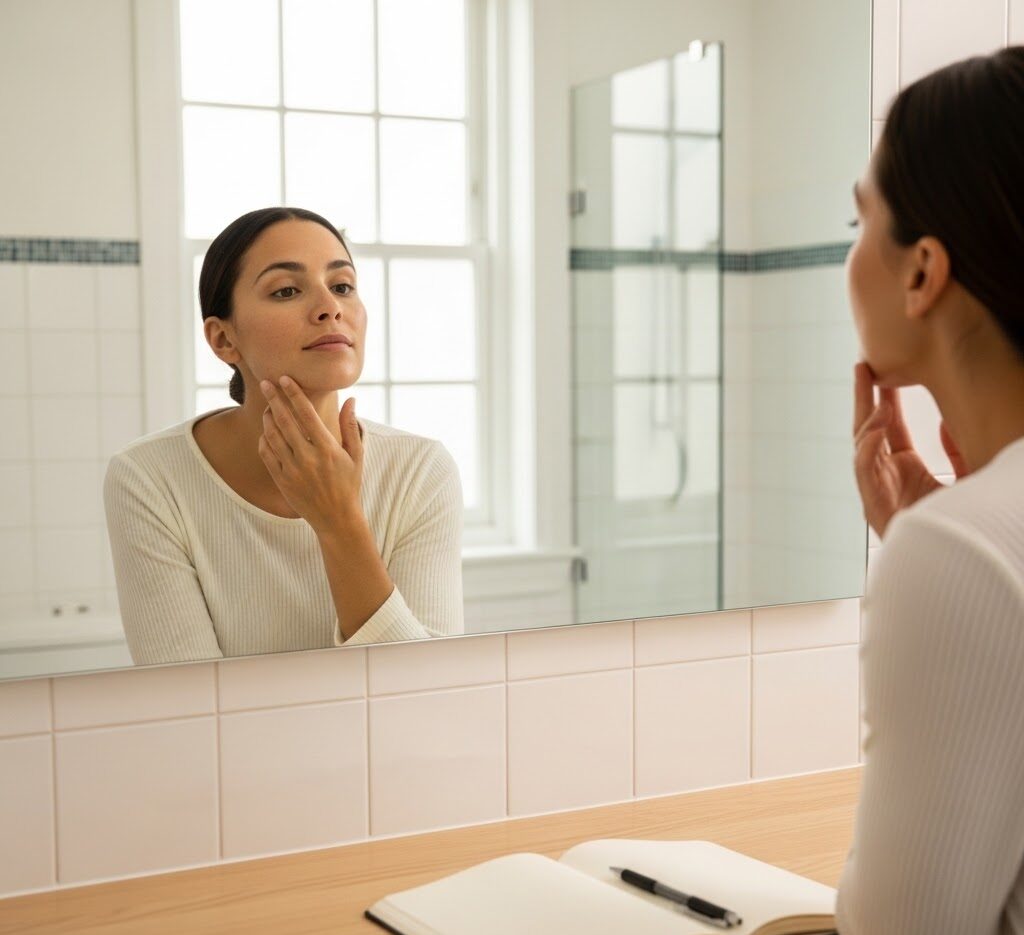
Most of us look in the mirror to check our appearance, but we should be looking for signals. Your skin is your body’s largest organ and its most visible communication tool. When something is off internally—whether it’s your nutrition, your stress levels, or your metabolic health—your skin is often the first to send up a “flare.” Understanding these skin signs of health allows you to take proactive steps for your overall well-being.
The Glucose-Skin Connection: What is Glycation?
One of the most powerful signals your skin can send is related to how your body processes sugar. High glucose levels can lead to a process called glycation, where sugar molecules attach to proteins like collagen and elastin, making them brittle and less resilient. This doesn’t just affect how you look; it’s a sign that your internal foundation is under pressure. By paying attention to sudden changes in texture or tone, you can catch metabolic shifts long before they become larger health issues.
Discipline as a Diagnostic Tool for Routine Building
Building a consistent daily routine isn’t just about “maintenance”—it’s about creating a baseline. When you have a disciplined routine, you become intimately familiar with your “normal.” This makes it much easier to spot when your “Early Warning System” is triggered.
Small Habits, Big Insights: What to Look For
Check the Texture: Sudden roughness or persistent dry patches can signal dehydration or a deficiency in essential fatty acids.
Observe the Tone: A “gray” or sallow shift often points to systemic fatigue, poor circulation, or high cortisol levels.
Identify the “Flares”: Specific dark patches (Acanthosis Nigricans) or sudden discolorations can be the “check engine light” for insulin resistance or hormonal shifts.
Investing in a daily routine is the highest form of self-research. By listening to what your skin is telling you today, you can build a stronger, healthier tomorrow.
Commonly Asked Questions
Q: Can your skin show signs of insulin resistance?
Yes. One of the most common signs is Acanthosis Nigricans, which appears as dark, velvety patches of skin, typically in body folds like the neck or armpits. Sudden skin tags can also be an early indicator.
Q: What does "glycation" do to your skin?
Yes. One of the most common signs is Acanthosis Nigricans, which appears as dark, velvety patches of skin, typically in body folds like the neck or armpits. Sudden skin tags can also be an early indicator.
Q: Why does my skin look gray when I’m tired?
Systemic fatigue affects microcirculation. When blood flow slows down and your nervous system is exhausted, your skin loses its natural “glow” and takes on a sallow or gray appearance, often accompanied by dark circles.
Want to see past topics? Explore Our Expert Advice here.