
Quick Summary: Skin tags and Dermatosis Papulosa Nigra (DPN) are incredibly common, completely benign (non-cancerous) skin growths that require no medical treatment for your physical health. If they become irritated, catch on clothing, or cause cosmetic concern, they can be safely and easily removed in the office using minor, tissue-sparing techniques.
What Is Causing These Small Bumps and Hanging Growths?
Understanding how genetics, friction, and natural development influence your skin structure is a strategic first step in managing skin tags and DPN. You can think of these growths as “exuberant structural landmarks” rather than dangerous cell changes. DPN lesions are structurally identical to tiny, flat seborrheic keratoses, resulting from a genetic trait that prompts superficial skin cells to multiply in small clusters, primarily on the face.
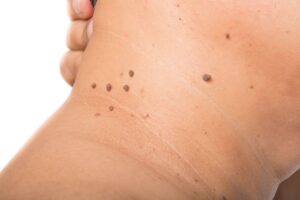
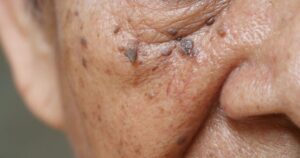
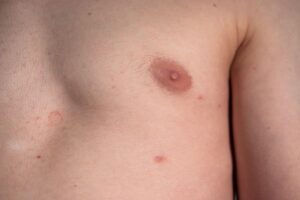
Conversely, the exact cause of skin tags remains a subject of ongoing study, but they represent a localized thickening of normal skin fibers. They are driven by localized skin friction or high levels of natural growth factors. Identifying these safe, non-contagious structures is the “So What?” factor in your skincare routine, allowing you to ignore them safely or pursue precise, scar-free professional removal options.
Comparing the Growths: Skin Tags vs. Dermatosis Papulosa Nigra
While both conditions are entirely harmless, they have distinct structural features, behavioral risk profiles, and unique locations on the body.
| Growth Type | Key Characteristics and Appearance |
|---|---|
| Skin Tags (Acrochordons) | Features: Soft, flesh-colored to slightly darker tissue outgrowths that appear to hang off the skin. Often attached by a narrow stalk (pedunculated) or appear thread-like (filiform). Range from 1mm to 5cm. Hotspots: Located in skin folds like the neck, armpits, and groin. |
| Dermatosis Papulosa Nigra (DPN) | Features: Multiple small (1-3mm), smooth, firm, black or dark brown bumps. They lack any scaling, crusting, or surface ulceration. Hotspots: Arise prominently on the face, specifically the cheeks and forehead. |
Am I at risk for skin tags or DPN?
These benign growths are a normal part of the body’s maturation process and have absolutely zero connection to personal hygiene or skin cleanliness.
- Skin Phototype Predilection: DPN is exceptionally common in individuals with skin of color, specifically those with Fitzpatrick skin phototypes IV, V, or VI. It affects up to 35% of Black Americans and demonstrates a higher frequency in females.
- Friction and Chafing: Skin tags are heavily triggered by mechanical friction—places where skin rubs against skin or tight clothing. They are more numerous in obese individuals and can emerge during pregnancy due to hormonal growth factor shifts.
- Metabolic Factors: The sudden or extensive multiplication of skin tags can be a clinical sign of underlying insulin resistance or type 2 diabetes mellitus, reflecting internal metabolic signaling.
- The Age Factor: Both conditions typically emerge around adolescence or early adulthood, and the overall incidence, size, and total number of lesions naturally expand as we grow older.
Solutions I Can Try at Home
Because DPN and skin tags are completely stable and safe, the most prudent at-home approach is to avoid aggressive interference that could leave permanent dark marks behind.
- Do Not Use DIY Freezing Kits or Creams: Over-the-counter wart removers, chemical acids, or locally destructive home remedies carry an exceptionally high risk of leaving deep scars, permanent loss of color (hypopigmentation), or severe darkening (post-inflammatory hyperpigmentation), especially in darker skin tones.
- Minimize Local Chafing: Wear loose clothing and reduce friction in your neck and underarm folds to help prevent new skin tags from being sparked by repeated mechanical rubbing.
- Shaving and Groom Shunts: If you have raised facial DPN papules or skin tags on the neck, execute care when using standard razors. Nicking these structures can cause sudden, sharp bleeding and local irritation.
When Should I See a Dermatology Provider?
While treatment is optional, professional clinical removal is highly recommended over at-home guesswork to ensure the lowest risk of altering your skin’s natural appearance.
Seek Professional Help if You Notice These “Red Flags”:
- Irritation, Pain, or Bleeding: A skin tag gets severely twisted, turns black or purple from a lost blood supply, or a facial DPN lesion bleeds spontaneously.
- Diagnostic Uncertainty: A dark facial bump grows larger than 3mm, develops an irregular border, or begins scaling, meaning a dermatologist must evaluate it to rule out a pigmented basal cell carcinoma or a melanoma.
- Cosmetic Obtrusiveness: A skin tag tracks into an inconvenient area (such as the eyelid) or you wish to seek clear skin through professional cosmetic removal.
- Desire for Scar-Free Removal: For DPN, the best professional method is targeted **electrodessication** because it carries the lowest risk of leaving dark scars or pigment changes compared to liquid nitrogen or chemical peels. For skin tags, quick in-office removal using specialized gradle scissors provides an immediate, clean resolution.
Frequently Asked Questions
- Q: Do skin tags have roots, and will removing one cause more to grow back?
A: No. Skin tags are completely surface-level structural overgrowths and do not possess “roots.” Removing a skin tag will not cause more to erupt in its place. However, if the underlying triggers—such as friction or insulin levels—remain unchanged, your body may naturally continue to form new separate tags over time. - Q: Why does my provider discourage using liquid nitrogen for DPN?
A: Liquid nitrogen cryotherapy applies extreme cold that destroys tissue. In darker skin tones (Fitzpatrick IV-VI), the pigment-producing cells are highly sensitive to freezing temperatures. Using liquid nitrogen on facial DPN spots carries a very high risk of leaving behind prominent, permanent white spots (hypopigmentation) that are far more noticeable than the original tiny bumps. - Q: What can I expect during an in-office removal session?
A: For skin tags, your provider can perform a quick surgical excision using specialized scissors or use targeted electrodessication to dry out the base. For facial DPN, a tiny electrical needle is used to lightly touch and dehydrate each papule. The treated areas form tiny, thin crusts that naturally slough away within a week, revealing smooth skin underneath.
The long-term outlook for skin tags and DPN is outstanding, as they are entirely benign structural traits that present zero risk to your overall physical health. Success lies in professional verification, maintaining internal metabolic health, and choosing precise, tissue-sparing clinical methods if you decide to clear the skin for cosmetic comfort.
Managing Skin Tags and Dermatosis Papulosa Nigra is complex and involves focusing on general skin care and working with a dermatology provider to determine the best treatment plan for you.