
Quick Summary: Contact dermatitis is an inflammatory skin reaction triggered by direct contact with specific irritants or allergens, resulting in an itchy, symptomatic rash. The most effective solution is to identify the triggering substance through clinical evaluation and strictly avoid further exposure to allow the skin to heal and prevent future flare-ups.
What Is Causing My Skin Rash?
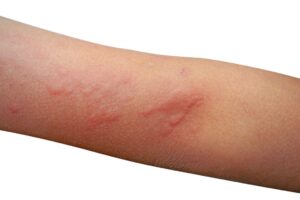
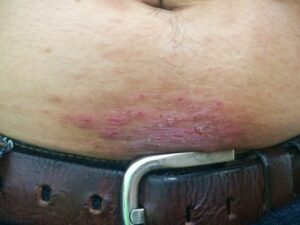
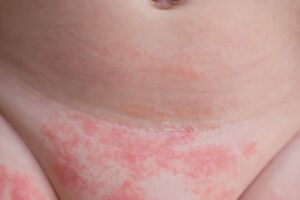
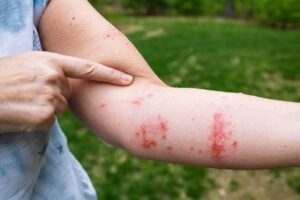
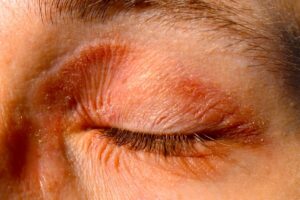
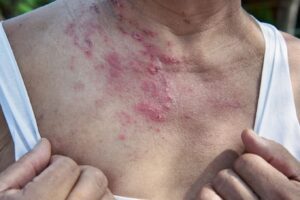
Understanding how your skin reacts to its environment is a strategic first step in managing recurring irritation. Our skin acts as a protective shield, but when that shield is compromised or hypersensitive, it reacts with inflammation. Because everyone’s skin is different, the appearance of this rash can vary; depending on your skin tone, the affected area may appear pink, red, purple, brown, or gray.

Podcast:
Learn More About Contact Dermatitis
The root cause of contact dermatitis generally falls into two categories. You can think of allergic reactions as “misguided guards”—your immune system mistakenly identifies a harmless substance as a threat and launches an overzealous defense. Conversely, irritant reactions are the result of a “damaged barrier,” where the physical integrity of the skin cells is directly compromised by harsh chemicals or friction.
Identifying whether your skin is reacting to a specific allergy or a general irritant is the “So What?” factor in choosing the right recovery path.
The Two Main Types: Irritant vs. Allergic
Distinguishing between these two types is essential for your recovery. Knowing the mechanism helps explain why some rashes appear instantly while others take days to manifest.
| Reaction Type | Key Differentiators |
|---|---|
| Irritant Contact Dermatitis (ICD) | Mechanism: A non-immune reaction where skin cells are directly damaged by substances like soaps, detergents, or solvents. Onset: Symptoms typically appear within minutes to hours after exposure. |
| Allergic Contact Dermatitis (ACD) | Mechanism: A delayed immune response mediated by specific white blood cells. Onset: The rash typically develops 48 to 72 hours after exposure to an allergen (such as poison ivy or nickel). |
Am I at risk for contact dermatitis?
If you are struggling with a persistent rash, it is important to remember that contact dermatitis is not a reflection of hygiene. Anyone can develop this condition regardless of age or skin tone. Susceptibility is often a combination of your environment and your skin’s natural barrier strength.
| Category | Common Susceptibilities |
|---|---|
| Everyday Life | Women (nickel/nail products), young children, and individuals with existing eczema. |
| Workplace | Healthcare, beauty industry, manual labor (mechanics/construction), and office workers. |
Where and How It Appears on My Body
The “shape” and “location” of a rash are strategic clues. Because contact dermatitis is caused by external contact, the rash often leaves a physical “map” of the trigger.
- Well-Demarcated Edges: Sharp or straight borders suggest something was applied or pressed against the skin (like a bandage or jewelry).
- Linear Streaks: Straight lines of redness often indicate “sweeping” against plant branches, such as poison ivy.
- Sun-Exposed Areas: Rashes confined to areas like the face or V of the chest may be triggered by light-activated allergens.
- The “Eyelid Mystery”: Eyelid skin is thin; hands may transfer an allergen (like fragrance) to the face, causing eyelids to react while palms show nothing.
Solutions I Can Try at Home
While medical treatments are available, consistent daily self-care is the foundation of repairing the skin barrier and preventing future flare-ups.
- Cleaning & Protection: Switch to gentle, fragrance-free cleansers. Wear protective clothing or gloves when handling known irritants.
- Barrier Repair: Apply moisturizers frequently. Use specific barrier creams, such as zinc-based pastes or glycerin mixtures.
- Specialty Management: For severe diaper irritation, allow for “air time” and use thick compounded pastes as recommended by your provider.
- Product Swaps: If you suspect a reaction to hygiene products, try fragrance-free or crystal mineral deodorants.
When Should I See a Dermatology Provider?
A professional diagnosis is the only way to identify hidden allergens through specialized “Patch Testing.”
Seek Professional Help if You Notice These “Red Flags”:
- Recurring Symptoms: The rash reappears quickly after you stop using treatment.
- Secondary Infection: You notice yellowish crusting, pus, or extreme warmth.
- Severe Pruritus: The itching is so intense it interferes with your daily life or sleep.
- Spreading: The rash begins to spread significantly beyond the initial area of contact.
Frequently Asked Questions
- Q: Is contact dermatitis contagious?
A: No. It is a localized inflammatory or immune reaction. It cannot be spread from person to person. - Q: Will the rash spread to other parts of my body?
A: While it starts where the substance touched you, it can spread to other areas through an immune response called autoeczematization. - Q: How do doctors find the exact cause?
A: Providers use medical history and Patch Testing, where small amounts of substances are applied to the skin under controlled conditions.
The long-term outlook for contact dermatitis is generally excellent. Success lies in identifying the trigger, strict avoidance, and consistent skin barrier support.