
1. Introduction: Navigating Your Diagnosis with Confidence
In the management of chronic dermatological conditions, patient education is more than just information—it is a strategic tool. When you understand the biological nature of your diagnosis, you move from a state of uncertainty to a position of empowered partnership with your clinical team. Lichen Sclerosus (LS) is a long-term journey, but clarity is the first step toward effective symptom control and emotional well-being.
Podcast:
Learn More About Lichen Sclerosus
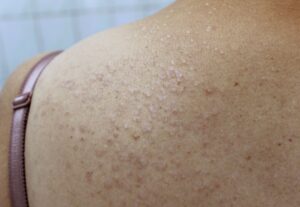
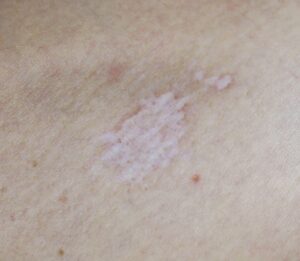
Lichen Sclerosus is a chronic inflammatory skin condition that primarily affects the sensitive anogenital region. However, it can also manifest as “extragenital” LS on other parts of the body, most commonly the back, neck, wrists, proximal extremities (arms and legs), and the inframammary areas (under the breasts). These areas may initially show small, flat-topped, pale papules that eventually become “porcelain-white,” wrinkled, or show signs of follicular plugging.
The “So What?” of active management is clear: while LS can be progressive, proactive care is essential to prevent scarring, skin fusion, and permanent structural changes, thereby preserving your quality of life. This guide is designed to help you understand the suspected origins of the condition and how to manage it effectively.
2. What Causes Lichen Sclerosus? Understanding the “Why”
For many, a diagnosis involving the genital area carries an unfair burden of stigma or “self-blame.” Understanding the etiology—the medical cause—of LS helps remove this weight. This is not a condition caused by hygiene or lifestyle choices; it is a complex biological reality.
Is It My Fault? Understanding the Complex Causes
Current medical research confirms that LS is an inflammatory, immune-mediated condition. While the exact singular cause remains unknown, several key factors are involved:
- Genetics: A positive family history of LS suggests a hereditary component, meaning some individuals are genetically predisposed to the condition.
- Hormonal Influence: LS shows a strong link to low-estrogen states. This explains why the condition is most prevalent in the years before puberty and following menopause.
- The Koebner Phenomenon: This refers to the tendency of LS to become active or worsen at sites of skin friction or trauma. Repetitive rubbing or skin irritation can trigger the “Koebner” response, leading to new lesions.
- Immunologic Factors: Research has identified increased levels of antibodies to extracellular matrix protein 1 in many patients, confirming that the body’s immune system is a primary driver of the inflammation.
Recognizing these markers helps us treat LS as a legitimate medical condition requiring clinical intervention rather than a personal failing.
3. Who Is Most at Risk? Identifying Key Factors
Understanding risk profiles is vital for early diagnosis. By recognizing the clinical “clues” early, patients and providers can intervene before the skin undergoes significant atrophic changes.
Am I at Risk? Factors That Influence the Condition
Risk is generally categorized by life stage, gender, and anatomy:
- Gender and Life Stages: LS is most common in prepubertal girls and peri- or postmenopausal women.
- Anatomical Factors: In men, the condition (sometimes called Balanitis Xerotica Obliterans) is significantly more common in those who are uncircumcised, often affecting the glans or prepuce.
- Family History: A history of the condition in close relatives increases individual risk.
The “So What?”: Identifying these risks allows you to be vigilant. In women, keep a watch for a “figure-8” or “hourglass” pattern—a distribution of pale, porcelain-white skin that circles both the vulva and the perianal area. You should also report “secondary changes” like erosions (skin breakdown) or ecchymosis (bruising/bleeding under the skin) to your dermatologist immediately, as these are clinical clues that the condition requires active management.
4. How Can I Manage Symptoms at Home? Non-Prescription Care
While superpotent topical steroids are the gold-standard medical treatment, daily self-care serves as “preventative maintenance.” These habits support the skin’s barrier and reduce the frequency of painful flare-ups.
Practical Steps for Daily Comfort: Self-Care and Protective Habits
- Gentle Cleansing: Use only non-soap cleansers. Traditional soaps strip the skin of essential oils, which can exacerbate the thinning (atrophy) associated with LS.
- Protective Barriers: Regularly apply emollients and barrier creams. This helps maintain skin integrity and provides a shield against external irritants.
- Clothing Choices: Opt for loose-fitting natural fibers to minimize friction and prevent the Koebner phenomenon.
- Physical Protection: Avoid rubbing or scratching. Physical trauma can lead to painful fissuring (cracks) or purpura (purple spotting caused by internal bleeding).
These steps work alongside your medical prescriptions to keep the skin as resilient as possible.
5. Looking Ahead: Long-Term Health and Monitoring
Lichen Sclerosus is a chronic, progressive condition characterized by cycles of relapse and remission. Because of its persistence, a long-term partnership with your healthcare provider is essential.
Staying Healthy: What to Watch For in the Future
The most critical “So What?” regarding long-term care is the prevention of malignancy. Regular anogenital examinations are mandatory because LS is a known risk factor for Squamous Cell Carcinoma (SCC) and Vulvar Intraepithelial Neoplasia (VIN). While the risk is only slightly higher than the general population, consistent maintenance therapy and professional monitoring ensure that any cancerous or precancerous changes are caught early.
The long-term goal of management is to control symptoms and prevent complications such as:
- Dyspareunia: Painful intercourse.
- Dysuria: Painful or difficult urination.
- Sclerosis: The hardening and “induration” of the skin that can lead to structural fusion.
Stay proactive and communicative. By combining professional surveillance with dedicated home care, you can maintain control over your health and live comfortably with LS.
6. Glossary of Terms for Your Reference
- Anogenital: Relating to the region of the anus and the genitalia.
- Atrophy: The medical term for the thinning or wasting away of skin tissue.
- Dyspareunia: Painful sexual intercourse, often a complication of unmanaged LS.
- Dysuria: Painful or difficult urination.
- Extragenital: LS occurring on areas of the body other than the genitals (e.g., back, neck, or wrists).
- Koebner Phenomenon: The appearance of new skin lesions at the site of friction, rubbing, or trauma.
- Pruritus: The clinical term for chronic itching.
- Purpura: Purple or red spots on the skin caused by bleeding underneath the surface.
- Sclerosis: The hardening or thickening of skin tissue, resulting in “indurated” (firm) skin.
- Squamous Cell Carcinoma (SCC): A type of skin cancer that requires regular monitoring in patients with chronic LS.