
1. Living with Vitiligo: An Introduction
Receiving a diagnosis of vitiligo can feel overwhelming, raising valid concerns about your appearance, identity, and future health. As a patient, it is strategically vital to view vitiligo not merely as a clinical diagnosis, but as a manageable skin condition. While it can be “cosmetically disabling”—particularly for those with darker skin tones—understanding the science behind the change is the first step toward regaining confidence and agency over your care plan.

Podcast:
Learn More About Vitiligo
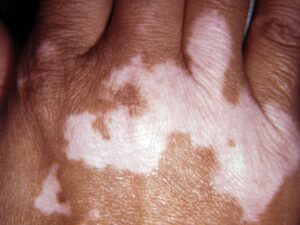
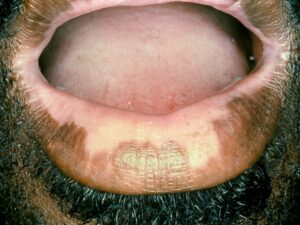
Clinically, vitiligo is a form of leukoderma, characterized by the appearance of “milky-white” or “chalky-white” patches of depigmentation. These patches occur when the skin loses its natural pigment, resulting in areas with smooth or irregular borders. While these changes can appear anywhere, they are most frequently found on the:
- Face and Neck: Particularly around the eyes and mouth (oral mucosa/lips).
- Extremities: Hands, wrists, and fingers.
- Sensitive Areas: Genitals, the groin, and around other body openings.
- Skin Creases: Armpits and other folds in the skin.
Understanding why these visible changes occur requires looking closely at the biological processes happening within your skin cells.
2. Why is My Skin Changing Color? Understanding the Causes
Gaining a clear perspective on the biological mechanisms of vitiligo is essential for choosing the right management path. When you understand the “why,” you can move from a place of uncertainty to a proactive strategy alongside your dermatology team.
The Role of Melanin and Melanocytes
Your skin, hair, and eye color are produced by melanin, a natural pigment created by specialized cells called melanocytes. Vitiligo occurs when these melanocytes are either destroyed or cease to function.
The “So What?” Factor: The loss of these cells has two critical consequences for the patient:
- Loss of UV Protection: Because melanin is the body’s natural defense against solar radiation, depigmented patches have zero natural protection against the sun.
- Hair Color Changes (Leukotrichia): If the condition affects areas with hair roots, such as the scalp or eyebrows, the hair will turn white or gray. This is known as leukotrichia, and unlike the skin, spontaneous repigmentation of the hair usually does not occur.
Types of Vitiligo: A Strategic Comparison
The suspected cause of melanocyte destruction typically dictates the classification of the condition:
- Non-segmental Vitiligo: The most common form, often appearing symmetrically on both sides of the body. It is widely recognized as an autoimmune condition, where the body’s immune system mistakenly attacks its own pigment cells.
- Segmental Vitiligo: This form affects only one side or area of the body. It is believed to be triggered by chemicals released from nerve endings that prove toxic to nearby melanocytes.
Environmental and Genetic Triggers
While genetics provide the “blueprint” for risk, certain triggers can initiate the onset. These include:
- Stressful Life Events: Significant emotional or physiological trauma.
- Skin Damage: Severe sunburns or industrial chemical exposure.
- Hormonal Shifts: Transitions such as puberty.
- Internal Defenses: A breakdown in the body’s natural ability to fight “free radicals” or response to certain viral infections.
3. Am I at Risk? Factors and Common Myths
Identifying risk factors is a key component of early diagnosis and strategic monitoring. Recognizing these factors helps your medical team differentiate vitiligo from other conditions like leprosy or post-inflammatory changes.
Primary Risk Factors
- Family History: A genetic predisposition is a primary factor in many cases.
- Existing Autoimmune Conditions: There is a strong clinical link between vitiligo and conditions like hyperthyroidism or pernicious anemia.
- The “Skin-Injury Effect” (Koebner Phenomenon): This is the tendency for new vitiligo patches to develop specifically at the site of a cut, scrape, or burn.
- Organ Health: Underlying issues with the liver or kidneys can be associated with increased risk.
Patient Pro-Tip: The Wood’s Lamp During your exam, your doctor may use a “Wood’s Lamp”—a specialized UV light. This tool is strategically used to enhance the visibility of depigmented patches that might be invisible to the naked eye, especially in patients with lighter skin tones.
Myth vs. Fact: The Contagion Question
Myth: Vitiligo is a contagious skin disease that can be spread through touch. Fact: Vitiligo is absolutely not contagious. It is an internal autoimmune or neurological process. You cannot “catch” it from anyone, and you cannot spread it to others through physical contact
4. How Can I Manage Vitiligo? Non-Prescription and Self-Care
While your doctor may prescribe topical JAK inhibitors or phototherapy, the daily management of vitiligo is largely in your hands. A strategic self-care routine is the most effective way to protect your skin and maintain your quality of life.
Daily Care Strategies
- Iconic Sun Safety: Because your white patches lack melanin, they are highly susceptible to painful, damaging sunburns. Use high-SPF sunscreen and UV-protective clothing daily.
- Cosmetic Camouflage: For those concerned with the appearance of patches on the face or hands, specialized camouflage makeup and skin stains offer an effective way to achieve a uniform skin tone.
- Injury Prevention: To minimize the Koebner phenomenon, take extra precautions to avoid unnecessary skin trauma, such as aggressive scrubbing or avoidable cuts.
- Strategic Nutritional Support: Note: Nutritional supplements are not a general “cure” for vitiligo. However, if your doctor prescribes systemic steroids to stop the spread of the condition, it is recommended to take 1,000 mg of calcium carbonate and 500 IU of Vitamin D3 daily to protect against potential bone density loss caused by the medication.
- Psychological Support: The impact of vitiligo is often more than skin deep. Joining a support group can provide the community and coping mechanisms needed to manage the psychosocial aspects of the journey.
5. Essential Takeaways for Your Journey
The clinical outlook for vitiligo is unpredictable; however, it is a condition that can be successfully managed. While there is currently no absolute cure, many patients see improvement through dedicated care. It is important to remember that spontaneous repigmentation, when it occurs, typically begins as small dots of color around the hair follicles.
Strategic Next Steps
- Request Comprehensive Bloodwork: Ask your doctor for a TSH (Thyroid Stimulating Hormone) test and a CBC (Complete Blood Count) to screen for associated conditions like thyroid disease and pernicious anemia.
- Commit to the Timeline: Medical treatments for vitiligo are slow-acting. It often takes 6 to 12 months to see stabilization, and up to 2 years for significant repigmentation results.
- Protect Your Skin: Treat sun protection as a non-negotiable daily prescription.
- Monitor Your Progress: Keep a log of new patches or changes, especially after skin injuries or stressful life events.
While your skin may be changing, your diagnosis is a starting point for a personalized, proactive health plan. By staying informed and patient, you can successfully navigate the complexities of vitiligo.