
Quick Summary: Melasma is a common, chronic skin condition that causes symmetrical brown or gray-brown patches on the face and neck. While notoriously challenging to treat, successful management is possible through rigorous sun protection and a multifaceted strategy that includes topical lightening agents and medical evaluation.
What Is Causing My Facial Discoloration?
Understanding the factors that influence skin pigment is a strategic first step in managing melasma. Your skin contains melanocytes—cells that produce melanin (pigment). In melasma, these cells become overactive and produce too much color in specific areas. Because everyone’s skin is different, the pigmentation can vary in intensity, ranging from faint to dark brown. The development of melasma is multifactorial and can be thought of as a “hypersensitive pigment” response. The primary triggers are UV radiation (from the sun and artificial light) and visible light, which signal the skin to overproduce color. Hormonal influences, such as pregnancy or oral contraceptives, often act as the “inciting event,” making the skin even more reactive to light exposure.



Podcast:
Learn More About Melasma
The Different Facial Patterns: Where Does It Appear?
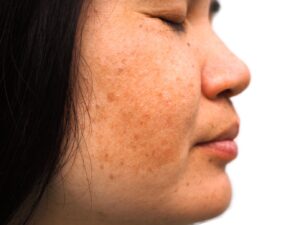
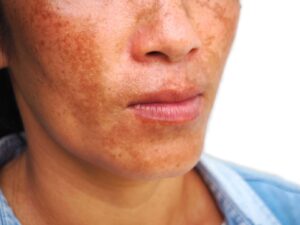
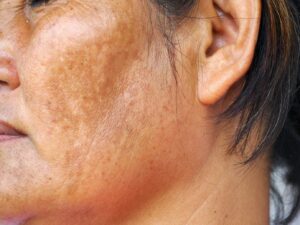
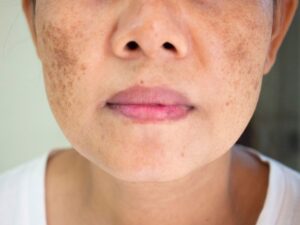
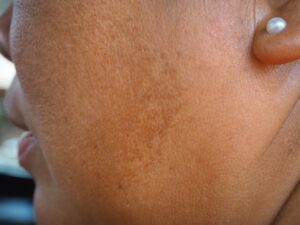
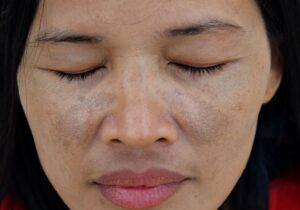
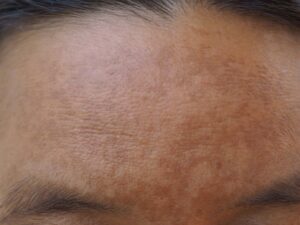
Melasma typically presents in symmetrical patterns on the face and neck. Recognizing your specific pattern helps your dermatology provider design the best treatment plan.
| Pattern Type | Typical Locations |
|---|---|
| Centrofacial | Affects the forehead, cheeks, upper lip, nose, and chin. |
| Malar | Focuses primarily on the cheeks and nose bridge. |
| Mandibular | Appears along the jawline. |
Am I at risk for melasma?
While melasma can affect anyone, certain biological and environmental factors increase your likelihood of developing these patches.
- Genetic Predisposition: A family history of melasma is a significant risk factor.
- Hormonal Fluctuations: Pregnant women (the “mask of pregnancy”) and individuals using hormonal birth control or hormone replacement therapy are at higher risk.
- Increased Sun Exposure: Living in equatorial latitudes or spending significant time outdoors without protection.
- Gender and Skin Type: Women are affected more often than men. It is most common in individuals with light-brown to dark skin tones (Fitzpatrick Skin Phototypes II-V), particularly those of Hispanic, Latin American, Middle Eastern, Asian, and African origin.
Where and How It Appears on My Body
Melasma is almost exclusively found on sun-exposed skin. Identifying the hallmarks of the condition is essential for distinguishing it from other types of hyperpigmentation.
- Symmetry: The patches almost always appear symmetrically on both sides of the face.
- Smooth Texture: Unlike some rashes, melasma patches are flat, smooth, and asymptomatic (not itchy or painful).
- Irregular Borders: The patches typically have “hazy” or irregular outlines rather than sharp edges.
- Light-Sensitive Distribution: Hotspots include the forehead, malar eminences (cheeks), upper lip, and chin.
Solutions I Can Try at Home
Consistent daily protection is the foundation of management. Without strict sun safety, even the strongest medical treatments will be ineffective.
- Rigorous Sun Protection: Wear wide-brimmed hats and sunglasses whenever outdoors.
- Pigmented Sunscreen: Use a physical sunscreen containing zinc oxide and iron oxide. Iron oxide provides essential protection against visible light, which also triggers melasma.
- Non-Prescription Lighteners: Consider over-the-counter options containing Vitamin C, Vitamin E, or Cysteamine compounds to support an even skin tone.
- Gentle Care: Avoid harsh facial scrubs or irritating products that can cause inflammation, as this may lead to further darkening.
When Should I See a Dermatology Provider?
Professional diagnosis and treatment are critical for melasma because many “depigmenting” treatments must be rotated or used intermittently to avoid side effects.
Seek Professional Help if You Notice:
- Treatment Resistance: At-home sun protection and over-the-counter products provide no improvement.
- Sudden Darkening: The pigmentation is rapidly increasing in size or intensity.
- Skin Irritation: You experience redness or pain from products, which can worsen hyperpigmentation.
- Atypical Appearance: The pigmentation is unilateral (on one side only) or has unusual colors like blue-black, which may indicate a different condition.
Frequently Asked Questions
- Q: Will my melasma go away after pregnancy?
A: It may fade after delivery, but it can darken with subsequent pregnancies and may persist even after hormonal triggers are removed. - Q: Does artificial light affect melasma?
A: Yes. Both visible light and artificial light sources can contribute to melasma, making daily sunscreen use important even when indoors. - Q: Can melasma be cured?
A: There is no permanent “cure,” and relapse is common. However, it can be effectively managed and significantly lightened with consistent care and professional guidance.
The long-term outlook for melasma depends on consistent adherence to light protection and maintenance therapies. By making “pigment protection” a daily habit, you can manage the condition and maintain clearer skin.