
Quick Summary: Syphilis is a highly curable bacterial infection that progresses through distinct clinical stages over time if left untreated. Because its symptoms mimic many common skin rashes, securing a professional diagnosis with serological testing is a critical milestone to ensure prompt treatment with targeted antibiotics and prevent permanent, long-term health complications.
What Is Causing My Skin Bumps and Sores?
Understanding how bacterial pathogens spread and behave within your body is a strategic first step in managing syphilis. Syphilis is an infectious disease caused strictly by a spiral-shaped bacterium called Treponema pallidum. This condition is primarily transmitted through direct, localized skin-to-skin contact with active syphilitic ulcers during sexual activity. It can also be passed through infected blood sharing or from a mother to her fetus during pregnancy, which is known as congenital syphilis.

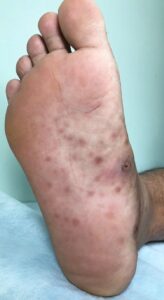

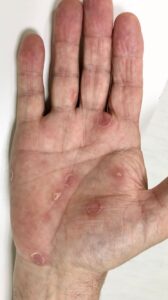
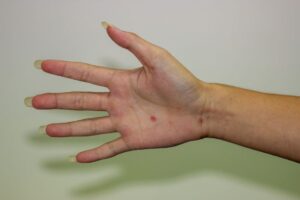
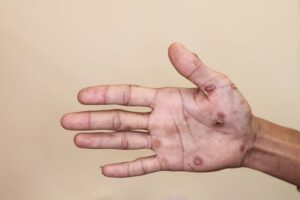
You can think of a syphilis breakout as a temporary “cellular invasion”—once the bacteria breach the outer layer of the skin, they multiply locally before traveling throughout the bloodstream to spark widespread, reactive skin changes. Clinically, syphilis is famously nicknamed “the great imitator” because its sores and rashes look almost identical to everyday conditions like pityriasis rosea, psoriasis, or simple drug reactions. Identifying this condition early through formal medical testing is the absolute “So What?” factor in your safety routine. Early treatment guarantees excellent health outcomes and stops transmission completely, whereas ignoring early signs allows the bacteria to hide dormant for decades before causing irreversible internal organ damage.
Understanding the Progression: Sorting the Stages of Syphilis
Syphilis moves through a highly pre-programmed series of architectural phases if not intercepted by proper medication. Recognizing these distinct presentation profiles prevents dangerous medical delays.
| Infection Stage | Key Differentiators and Visual Configurations |
|---|---|
| Primary Syphilis | Characterized by the formation of a solitary, small, firm, and completely painless ulcer known as a chancre. It features clean, sharp margins and a hardened, indurated base. It surfaces precisely at the site where the bacteria first entered the body. |
| Secondary Syphilis | Occurs weeks later as a widespread breakout on the skin, characteristically populating the torso, limbs, and notably expanding onto the palms and soles. The spots are usually a non-itchy coppery red or brownish hue. Moist body folds may develop highly infectious, greyish-white plaques called condylomata lata. |
| Latent Syphilis | A completely silent, asymptomatic stage where all visible skin markings vanish. The hidden infection can only be detected via laboratory blood screenings. Early latent (under 1 year) remains infectious, while late latent behaves as non-infectious to sexual partners. |
| Tertiary Syphilis | Advanced disease developing years or decades later. It causes soft, tumor-like nodules called gummas to erode the skin or bones, and triggers devastating cardiovascular issues (like aortic aneurysms) or brain complications (neurosyphilis). |
Am I at risk for syphilis complications?
Acquiring syphilis is an everyday environmental exposure that can happen to any sexually active individual. It has absolutely zero connection to personal hygiene flaws, lifestyle status, or a lack of personal cleanliness.
- Unprotected Exposure Vectors: Engaging in unprotected intimacy, managing multiple concurrent sexual partners, or commercial sex work significantly elevates baseline transmission risks. Statistically, men who have sex with men (MSM) experience a higher clinical prevalence.
- The HIV Synergistic Axis: Having an active HIV infection or any condition that compromises systemic immunity increases the likelihood of acquiring the infection and speeds up progression toward advanced nervous system involvement.
- The Congenital Threat: Expectant mothers with undetected syphilis face severe obstetric risks, as the bacteria easily cross the placenta, causing developmental abnormalities in the baby (such as saddle nose, frontal bossae, or Hutchinson’s teeth) or premature labor.
- Irreversible Advanced Damage: While early stages are easily wiped out by proper antibiotics, delayed care in latent or tertiary stages can lock you into irreversible central nervous system decline, blindness, or dementia.
Where and How It Appears on My Body
The symptoms of syphilis follow a strict anatomical layout that changes completely depending on the stage of the bacterial lifecycle.
- The Inoculation Landmark: Primary chancres develop explicitly at the point of intimacy—most commonly populating the external genitalia, but frequently hiding unnoticed inside the oral cavity, on the lips, or in the anal canal.
- The Palm and Sole Corridor: During the secondary stage, a key clinical hallmark is the symmetric eruption of coppery or brownish spots stretching across the palms of your hands and the soles of your feet. Finding a rash in these specific zones is a vital indicator for your provider.
- Moist Hideouts (Condyloma Lata): In friction-heavy, damp environments like the groin, inner thighs, under breasts, or armpits, the rash transforms into flat, broad-based, moist, and foul-smelling warts. These are highly infectious.
- Muted Complexion Clues: On deeper skin tones, the classic coppery red background of the secondary rash may look muted, hyperpigmented dark brown, or purplish. On dark skin, look closely for the characteristic ring-like (annular) borders or a fine powdery scale wrapping the spots.
Solutions I Can Try at Home
Because syphilis is a deep, actively multiplying systemic bacterial infection within your blood and tissues, there are absolutely zero home remedies, creams, or over-the-counter washes that can slow it down. At-home management focuses entirely on safety coordination and preventing spread.
- Enforce Complete Sexual Abstinence: Refrain absolutely from all physical intimacy and sexual activity from the moment you suspect a sore until a medical provider confirms you have completed your full antibiotic course and all surface sores are fully healed.
- Notify and Coordinate Partners: Inform your recent intimate partners immediately so they can undergo identical serological testing. Simultaneous tracking and treatment of contacts is a public health necessity to stop re-infection loops.
- Do Not Pick or Squeeze Chancres: Squeezing an open sore or trying to pick away a crusted lip ulcer will not remove the bacteria. It will only break your surrounding tissue barriers, cause painful local inflammation, and track the highly infectious fluid onto your fingers or eyes.
When Should I See a Dermatology Provider?
Syphilis can easily hide as common eczema or a simple viral cold sore, making early professional clinical triage essential.
Seek Professional Medical Help immediately if You Notice These Warning Signs:
- The Emergence of a Painless Sore: You notice a firm, hard-edged, or open painless sore on your lips, tongue, or genital area, requiring an urgent clinical checkup.
- A Rash Climbing Onto Palms or Soles: You develop a new, non-itchy, brownish rash that moves onto the palms of your hands or the bottoms of your feet, which requires immediate diagnostic serological blood draws.
- Signs of Organ or Nerve Involvement: Systemic skin updates are accompanied by severe unremitting headaches, sudden dizzy spells, changes in your vision, or localized numbness, suggesting the bacteria have entered your central nervous system (neurosyphilis).
Frequently Asked Questions
- Q: What specific lab testing panel is mandatory to definitively diagnose syphilis?
A: Because syphilis can mimic many skin conditions, a definitive diagnosis requires a strict, two-step laboratory blood algorithm. Your provider will first run a non-treponemal screening test, such as a Rapid Plasma Reagin (RPR) or VDRL. This test checks for antibodies related to cellular damage; its values (titers) directly track disease activity and tell your team how well your body responds to treatment. If the RPR is reactive, it must automatically reflex to a specific treponemal confirmatory test, such as a TP-PA or FTA-ABS, to isolate antibodies explicitly directed against the syphilis bacterium. This confirmatory test usually stays positive for life, even after you are cured. Your provider will also include a comprehensive screening for other STDs, including HIV and HSV. - Q: What is the gold-standard prescription antibiotic protocol for each stage?
A: Long-acting Penicillin G is the absolute treatment of choice for all presentations of syphilis. For primary, secondary, or early latent stages, your provider will administer a single intramuscular injection of Benzathine Penicillin G (2.4 million units). If your infection is staged as late latent or tertiary, you will receive this intramuscular penicillin injection weekly for three consecutive weeks. If a patient has a verified penicillin allergy, oral Doxycycline or tetracycline courses can be used as an alternative. However, for pregnant individuals or patients with neurosyphilis, penicillin is so critical that they must undergo a formal in-hospital penicillin desensitization program to ensure they can receive the drug safely. - Q: What is the post-treatment tracking schedule, and what is the Jarisch-Herxheimer reaction?
A: Healing requires continuous clinical tracking. You must return to the office for formal follow-up blood draws to monitor your RPR titers at exactly 3, 6, and 12 months post-treatment. Successful eradication is confirmed when your RPR titers drop significantly or become completely negative. Additionally, be aware that within 24 hours of receiving your penicillin injection, you may experience a temporary immune event called a Jarisch-Herxheimer reaction. This causes a sudden high fever, shaking chills, muscle aches, and a temporary worsening of your skin rash. It is not a penicillin allergy; it is a normal response caused by your immune system reacting to toxins released as the bacteria die off rapidly. It can be safely managed at home with rest and over-the-counter anti-inflammatories.
The long-term outlook for early-stage syphilis is outstanding, as targeted penicillin therapy completely wipes out the bacteria and restores total tissue health. Success relies on swift laboratory verification, testing and treating all intimate partners simultaneously, finishing your full medical follow-up plan, and working hand-in-hand with your interprofessional dermatology team to keep your body protected.