
Quick Summary: A drug eruption is an adverse skin reaction triggered by an immune system overreaction to a specific medication. The most critical initial step is to identify and stop the offending drug under medical supervision, allowing the skin to clear and preventing potentially severe systemic complications.
What Is Causing My Skin Rash?
Understanding how your immune system interacts with internal medications is a strategic first step in managing a drug rash. A drug eruption occurs when your body’s defensive systems mistakenly identify a normally harmless medication as a dangerous threat. You can think of this as a “misguided guard” response—the immune system launches an overzealous inflammatory defense that manifests visibly on your skin.
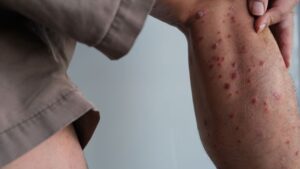
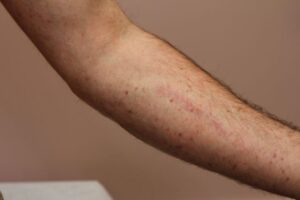
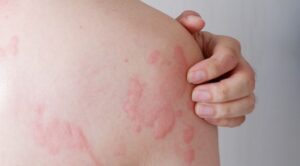

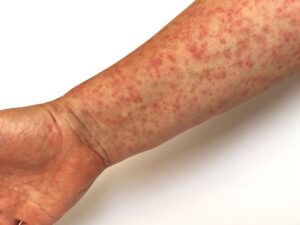
Because everyone’s skin is different, the appearance of a drug rash can vary significantly; depending on your skin tone, the affected areas may appear bright red, pink, violaceous, brown, or grayish. Identifying the precise timing between when you started a medicine and when the rash appeared is the “So What?” factor in establishing a clear temporal relationship and pinpointing the culprit.
Understanding the Common Patterns: Morbilliform vs. Fixed Reactions
Drug eruptions can manifest in several distinct patterns. Distinguishing between them helps explain why some rashes spread widely across your body while others reappear in the exact same spot.
| Reaction Variant | Key Characteristics and Visual Profiles |
|---|---|
| Morbilliform Eruption | The most common type of drug rash. It features countless small flat spots (macules) and tiny bumps (papules) that merge together into large, widespread patches. It closely resembles a measles rash. |
| Fixed Drug Eruption | Characterized by a solitary, round or oval, dusky or violaceous patch or plaque. This unique reaction is called “fixed” because it will recur in the exact same geographic skin spot every time you are re-exposed to that specific drug. It routinely leaves behind a dark mark of post-inflammatory hyperpigmentation as it heals. |
Am I at risk for a drug eruption?
Struggling with a sudden drug rash can happen to anyone and has absolutely zero connection to personal hygiene or skin cleanliness. Susceptibility is determined by your internal biology and medication patterns.
- The Polypharmacy Factor: The more medications you take concurrently, the greater the statistical likelihood of developing a drug allergy or cross-reaction.
- Genetic Subtypes: Inherited genetic traits can alter how your liver enzymes metabolize specific compounds, making certain individuals highly susceptible to medication hypersensitivity.
- Medical Baseline: Having an active underlying viral infection can temporarily alter your immune system’s baseline, significantly elevating your risk of erupting in a rash when given common antibiotics.
- Prior Reactions: A personal history of any adverse drug reaction or a strong family history of severe medication allergies indicates a reactive immune template.
Where and How It Appears on My Body
Drug rashes leave a distinct physical “map” on the body that helps your dermatology provider easily separate them from external allergies or contact rashes.
- Trunk-First Migration: Morbilliform and urticarial (hive-like) drug rashes typically populate the trunk (chest, abdomen, and back) first, before migrating symmetrically outward to involve the neck and extremities.
- Fixed Reaction Hotspots: Fixed drug eruptions show a strong preference for specific anatomical zones, most frequently surfacing on the hands, feet, eyelids, and the anogenital region.
- Targetoid Formatting: Certain drug-induced reactions, like Erythema Multiforme, present symmetrically as distinctive “bull’s-eye” or target-like plaques, often starting on the hands and feet before climbing the limbs.
Solutions I Can Try at Home
Because a drug eruption is driven by an internal systemic process, at-home measures are focused entirely on soothing the skin barrier and tracking symptoms safely.
- Build a Temporal Medication Timeline: Compile a complete, meticulous list of every prescription, over-the-counter pill, vitamin, supplement, or herbal product you took starting at least one full month prior to the rash. Note the exact start date of each product alongside the start date of your skin changes.
- Do Not Pick or Scratch: Scratching or picking at inflamed plaques breaks the skin barrier, increases the intensity of the itch signals, and risks introducing a secondary bacterial infection.
- Cool Barrier Support: Apply lightweight, fragrance-free moisturizers or cool compresses to help soothe surface heat and quiet localized itching while you await clinical evaluation.
When Should I See a Dermatology Provider?
A drug eruption requires immediate clinical assessment. There are no routine lab tests that can instantly identify the offending drug, meaning a specialized clinical evaluation is the only way to manage your recovery safely.
Seek Immediate Medical Help if You Notice These “Red Flags”:
- Widespread Peeling or Blistering: The rash develops painful blisters, or the skin begins to lift and peel away easily with gentle pressure. This is a medical emergency that can indicate life-threatening conditions like Stevens-Johnson Syndrome (SJS) or Toxic Epidermal Necrolysis (TEN).
- Signs of Anaphylaxis: Your skin changes are accompanied by swelling of the face, lips, or tongue (angioedema), difficulty swallowing, or any shortness of breath. **Call 911 immediately.**
- Systemic Symptoms and Swollen Glands: The rash is accompanied by a sudden high fever, facial swelling, or noticeably swollen lymph nodes in the neck, armpits, or groin. This can indicate Drug Reaction with Eosinophilia and Systemic Symptoms (DRESS), a severe hypersensitivity syndrome affecting internal organs.
- Diagnostic Uncertainty: You are taking a medically necessary medication and cannot stop it without an expert determining if the rash is a benign viral exanthem or a dangerous drug allergy requiring a diagnostic skin biopsy or a complete blood count (CBC) check.
Frequently Asked Questions
- Q: What are the most common medications that trigger these skin reactions?
A: The most frequent culprits include beta-lactam antibiotics (such as penicillins and cephalosporins), sulfonamides (sulfa drugs), nonsteroidal anti-inflammatory drugs (NSAIDs like ibuprofen or aspirin), and anti-epileptic medications used for seizures. - Q: How long will it take for the rash to clear up after stopping the medicine?
A: The timeline varies widely based on how your body clears the compound. Some mild, immediate reactions may dissipate within a few hours or days after stopping the drug. However, delayed T-cell mediated reactions can continue to evolve and take several weeks or even months to resolve fully, sometimes requiring a slow taper of prescription oral corticosteroids to calm the skin. - Q: Can a drug allergy be permanently cured or desensitized?
A: True drug allergies cannot be permanently cured, and the primary prevention strategy is absolute avoidance of the known allergen. However, if a specific medication is absolutely life-saving and has no alternative, an allergist can perform specialized **desensitization therapy** in a hospital setting, which involves introducing miniscule, gradually increasing doses over hours to build a temporary tolerance.
The long-term outlook for most common drug eruptions is excellent once the offending medication is successfully removed from your routine. Success relies on swift medical guidance, detailed documentation of your drug history, and ensuring your medical records are updated permanently to prevent accidental re-exposure.