
Pityriasis Rosea is a common, acute, and self-limiting inflammatory skin condition that characteristically begins with a single larger "herald patch" before spreading into a wider, symmetrical eruption across the torso and limbs. While the sudden emergence of a widespread rash can look alarming, the condition is entirely harmless and is pre-programmed to resolve on its own. Because it follows a strict biological timeline, clinical management focuses on ruling out similar conditions, soothing surface skin irritation, and cooling the intense itch while your body completes its natural healing cycle.
What Is Causing This Linear, Expanding Rash?
Understanding how viral surface changes and immune signaling interact with your skin layer is a strategic first step in managing pityriasis rosea. The exact root cause of this condition remains a subject of medical study, but strong clinical evidence links its sudden onset to a localized reactivation of common widespread strains, specifically human herpesviruses 6 and 7 (HHV-6/7). It is important to note that these are not the strains responsible for cold sores or genital herpes; they are distinct viruses that most people are exposed to in early childhood.
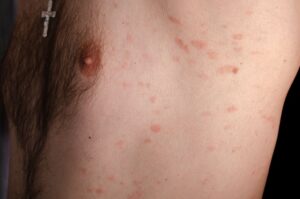
In other instances, pityriasis rosea can surface as a post-viral reactive phenomenon following a systemic illness like influenza or COVID-19, or manifest as a drug-induced skin eruption triggered by everyday medications, such as angiotensin-converting enzyme (ACE) inhibitors used for blood pressure or nonsteroidal anti-inflammatory drugs (NSAIDs).
You can think of pityriasis rosea as a temporary, self-contained “immune reset response.” Unlike chronic conditions such as eczema or psoriasis, the underlying inflammatory trigger operates on a strict, time-limited biological lifecycle within the skin layers. Identifying the structural layout of this rash early is the essential “So What?” factor in your care routine, providing you with total peace of mind that it is non-contagious, entirely benign, and destined to fade away completely without intensive medical intervention.
Understanding the Progression: From Herald Patch to Widespread Eruption
Pityriasis rosea follows a highly structured, multi-step dermatological sequence. Recognizing how the skin transitions through these distinct architectural phases prevents unnecessary parenting or patient anxiety and helps you track your recovery accurately.
| Condition Phase | Key Characteristics and Visual Layouts |
|---|---|
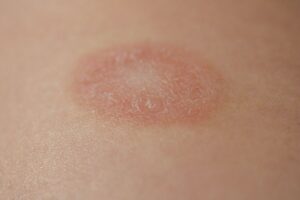
The Herald Patch (Initial Phase) | A solitary, isolated, round or oval-shaped plaque that surfaces at least two days—and up to a few weeks—before any other spots arrive on the body. Measuring anywhere from 2 to 10 centimeters, it exhibits a distinct salmon-pink color on light skin or a dull red hue, featuring a fine, dry central scale and slightly raised, well-defined borders. It is most commonly found on the chest, abdomen, or back. |
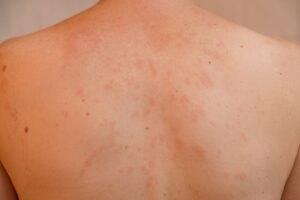
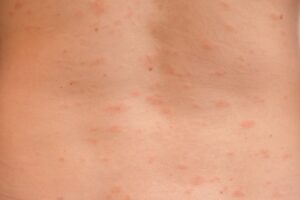
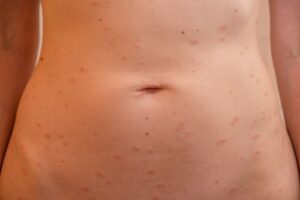
The Secondary Eruption (Generalized Phase) | Countless smaller, oval macules and plaques explode symmetrically across the trunk and proximal limbs, moving characteristically from the top down. Each spot displays a highly specific structural hallmark known as a “collarette” scale—a thin, delicate ring of fine peeling skin that trails uniformly just inside the outer red border of each lesion, rather than sitting on the very edge. |
Am I at risk for pityriasis rosea?
Experiencing a sudden breakout of pityriasis rosea is an incredibly widespread clinical event that affects thousands of individuals annually. It occurs as an isolated skin reaction and is completely independent of personal hygiene, skin cleanliness, or dietary choices.
- The Youth Profile: It demonstrates a profound biological preference for adolescents and young adults, with the vast majority of cases peaking dynamically between the ages of 10 and 35.
- Seasonal Shifts: Susceptibility spikes sharply during specific times of the year, demonstrating clear, predictable peaks in the late winter, early spring, and autumn months.
- The Gender Axis: It occurs slightly more frequently in women than in men, reflecting a mild demographic variance.
- Atypical Inversions: While the classic rash spares the extremities and face, an inverse variant can actively pop up in reverse areas—populating the armpits, groin creases, and across the face while sparing the trunk. This atypical pattern is observed more frequently in young children and African American patients.
Where and How It Appears on My Body
Pityriasis rosea leaves an unmistakable physical “map” of landmarks across your trunk that allows a trained dermatology provider to distinguish it instantly from other rashes.
- The “Christmas Tree” Map: On the back, individual oval plaques naturally align their long axes parallel to Langer’s lines (relaxed skin tension lines). They flare down and outward from the spine centrally, creating a beautiful “fir-tree” or Christmas tree distribution.
- The Bathing Suit Corridor: The secondary rash shows a massive preference for the trunk, abdomen, chest, and proximal limbs, while almost completely sparing the face, scalp, palms, and soles.
- The Collarette Hallmark: Close inspection reveals that the fine white flaking does not sit on the outer edge; it trails uniformly just inside the border of the lesion.
- Muted Complexion Clues: On deeper skin tones, the classic salmon-pink color may look muted, hyperpigmented dark brown, or purplish. It can leave temporary light or dark shadows behind as it heals, which naturally fade back to your baseline skin tone over time.
Solutions I Can Try at Home
Because the lifecycle of pityriasis rosea is pre-programmed to resolve on its own, home management is focused entirely on minimizing skin stress and controlling localized itching.
- Enforce a Cool Environment: Avoid hot water, saunas, and intense exercise that triggers heavy sweating. High heat directly irritates active patches and intensifies the urge to scratch.
- Gentle Skincare Routines: Take short showers using lukewarm water and soap-free, suds-free cleansers. Suds strip natural lipids and worsen the dryness of the fine scale.
- Aggressive Moisture Support: Apply thick, fragrance-free emollient creams or lightweight moisturizers twice daily to maintain barrier hydration and prevent rough texturing.
- Controlled Sunlight Exposure: Brief, natural exposure to sunlight can help accelerate the fading process and soothe active plaques. Ensure you do not burn, as sun injury will prolong recovery.
When Should I See a Dermatology Provider?
A comprehensive full-body assessment by a medical expert provides absolute certainty, ruling out serious conditions that mirror the herald patch before you begin treating it at home.
Seek Professional Help if You Notice These “Red Flags”:
- Unmanageable Pruritus: The itching becomes intensely severe, preventing sleep or interfering with your or your child’s daily school and work activities.
- The Multi-Month Extension: The scaly patches persist, fail to flatten, or continue spreading dynamically beyond 4 months, requiring a 4mm punch biopsy to evaluate the tissue and rule out pityriasis lichenoides or mycosis fungoides.
- Palm and Sole Involvement: Scaly copper-red or brown papules migrate onto your palms and the soles of your feet, which requires urgent testing to rule out secondary syphilis.
- Signs of Secondary Complication: Scratching splits the skin barrier, leading to open sores, intense localized pain, or fluid-draining pus that requires clinical culture swabs.
Frequently Asked Questions
- Q: How long does pityriasis rosea last?
A: It is a classic self-limiting event that typically clears beautifully within 6 to 10 weeks. In some stubborn instances, the immune system takes longer to reset, and the spots can persist for up to 5 months before completely fading away. Relapse is exceptionally rare, occurring in only 2% to 3% of patients. - Q: What prescription medical options can a provider offer if my itch is severe?
A: If your symptoms are significantly affecting your quality of life, your provider can step up therapy from simple emollients. They may prescribe a short course of targeted topical steroid creams or non-sedating antihistamines to calm localized nerve endings. For severe, widespread eruptions, in-office narrowband UVB phototherapy sessions can dramatically speed up clearance. - Q: Should I take oral antiviral medications like Valacyclovir?
A: No, routine treatment with valacyclovir or acyclovir is not standard care for pityriasis rosea. While a viral trigger is highly suspected, the rash represents a post-viral or inflammatory response rather than an active, multiplying viral infection, meaning antivirals will not consistently alter the rash’s duration unless utilized very early in select severe cases under strict supervision.
The long-term outlook for pityriasis rosea is outstanding, with 100% of healthy patients achieving total clearing and excellent skin health as the condition completes its pre-programmed biological cycle. Success lies in patience, gentle daily hydration support, heat avoidance, and close collaboration with your dermatology provider to keep your skin protected.