
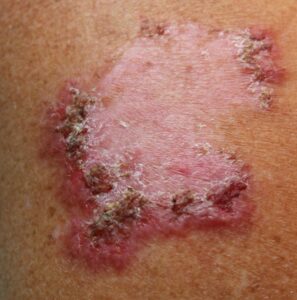
Hailey-Hailey Disease (HHD), also known as Benign Familial Pemphigus (BFP), is a rare, hereditary blistering disorder characterized by a recurrent, painful, and erosive skin rash [cite: 3492, 3502, 3547]. It typically presents as raw, moist patches that break down into painful erosions, cracks, and crusted sores [cite: 3492]. While managing this chronic condition requires ongoing patience, understanding your genetic baseline, controlling environmental triggers, and implementing a multi-step rotating medication strategy can effectively minimize flare-ups and dramatically improve your skin comfort [cite: 3503, 3517, 3528].
What Is Causing My Skin to Crack and Blister?
Understanding how your skin cells maintain their structural integrity is a strategic first step in managing Hailey-Hailey Disease. HHD is fundamentally a genetic disorder caused by a permanent defect in the ATP2C1 gene located on chromosome 3q21-24 [cite: 3498, 3548]. This specific gene provides instructions for creating a vital calcium and manganese pump protein known as SPCA1 within your skin cells (keratinocytes) [cite: 3499, 3554, 3571, 3583].
When this internal pump functions insufficiently, your cells suffer from a localized lack of calcium, causing the cellular “velcro” connections called desmosomes to assemble improperly [cite: 3500, 3562]. Without these functional bridges, your skin cells become “unstuck” from one another—a microscopic process known as acantholysis [cite: 3500, 3505, 3552]. You can think of an HHD flare-up as an internal “adhesion failure.” When the skin layers separate, fluid builds up and creates raw, weeping, and easily damaged tissue [cite: 3492, 3564]. Identifying this condition early through an expert clinical exam and family history is the essential “So What?” factor in your care [cite: 3505]. Because the disease is driven by this distinct internal structural gap, simple moisturizers are completely insufficient, making tailored protective routines mandatory to defend your tissue lines [cite: 3517].
Understanding the Condition: Comparing HHD to Common Intertrigo
Because Hailey-Hailey Disease targets the moist environments of your body creases, it is frequently misdiagnosed as simple chafing or intertrigo [cite: 3496, 3509]. Recognizing these key clinical differences helps you secure the correct care early [cite: 3505, 3509].
| Skin Condition | Key Differentiators and Biological Behaviors |
|---|---|
| Intertrigo | Mechanism: Purely reactive, localized skin inflammation caused mechanically by sweat trapped in skin folds rubbing together [cite: 2047, 3509]. It presents with simple raw redness (maceration) but completely lacks a history of blisters, an underlying family history, or a chronic relapsing pattern [cite: 3509, 3575, 3581]. |
| Hailey-Hailey Disease | Mechanism: Driven by true genetic acantholysis (loss of cell-to-cell stickiness) [cite: 3500, 3552]. It forms extensive, macerated moist plaques that split into deep, agonizingly painful linear cracks, scales, and crusted scabs [cite: 3492, 3561]. It follows a lifelong, chronic relapsing course [cite: 3502, 3581]. |
Am I at risk for Hailey-Hailey Disease flares?
Struggling with a painful skin fold flare-up is a biological and hereditary event [cite: 3492, 3502]. It has absolutely zero connection to poor personal hygiene or a lack of personal cleanliness [cite: 3521].
- The Genetic Template: The primary risk factor is inheriting the gene mutation from a parent; however, the condition can pop up sporadically in any race or ethnicity [cite: 3501, 3503].
- Age of Onset: While it can technically surface at any age, symptoms typically emerge during early adulthood, peaking dramatically between the second and fourth decades of life (ages 10 to 40) [cite: 3502].
- Thermal and Friction Triggers: Your skin is at an extreme risk of flaring when exposed to excessive heat, heavy sweating, physical friction, or an accidental sunburn, making hot summer months a predictable danger zone [cite: 3503, 3519].
- Secondary Microbial Invasions: Because the skin layers are split open, you face a continuous, high risk of developing secondary bacterial or fungal infections within the open wounds, which can severely amplify your pain and prolong the flare [cite: 3525, 3537].
Where and How It Appears on My Body
HHD maps itself almost exclusively within the high-friction, symmetric skin creases of your body, leaving distinct physical landmarks for your provider [cite: 3492, 3495, 3496].
- The Skin Fold Layout: Lesions develop symmetrically across your primary body folds—most frequently grouping inside the armpits (axillae), the groin creases, the sides of the neck, beneath the breasts, and deep within the intergluteal fold between the buttocks [cite: 3492, 3496, 3557].
- The Expanding Ring Profile: Active plaques often expand outwardly while gently clearing in the center, causing the raw, crusted edges to take on a circular or ring-shaped layout [cite: 3492, 3493].
- The Extracutaneous Clues: Look closely at your hands and nails. HHD frequently leaves non-skin markers, including distinct white bands running across the fingernails and tiny, microscopic pits embedded in the palms of your hands [cite: 3494].
- Muted Complexions: On deeper skin tones, the classic bright red background of the inflamed plaques can appear muted, dusky, or deep brown [cite: 2506]. As raw sores heal, they frequently leave behind long-lasting shadows of post-inflammatory color changes [cite: 1673].
Solutions I Can Try at Home
Because HHD is driven by a structural vulnerability to friction and moisture, successful at-home care focuses entirely on cooling your climate and minimizing surface-level cellular stress [cite: 3503, 3517].
- Enforce a Cool, Air-Conditioned Climate: When outdoor temperatures rise, minimize strenuous outdoor exercise and stay indoors near fans or air conditioning [cite: 3519, 3520]. Keeping your body cool directly stops the sweat cycle that weakens your cell-to-cell bonds [cite: 3503].
- Execute the Bleach Bath Protocol: To safely lower the volume of skin-surface bacteria and prevent painful secondary infections, incorporate a bleach bath into your routine twice a week [cite: 3525]. Add 1/2 cup of regular household bleach to a standard full bathtub of lukewarm water and soak for 5 to 10 minutes [cite: 401, 402].
- Minimize Friction and Moisture: Wear incredibly soft, loose-fitting cotton clothing and completely avoid tight or restrictive waistbands [cite: 3522]. After bathing, dry your skin creases thoroughly and apply a protective layer of plain zinc paste or a compounded 2% diphemanil dusting powder to absorb sweat and prevent painful rubbing [cite: 3516, 3526, 3527].
- Do Not Squeeze or Aggressively Scrub: Never try to aggressively rub active plaques or pick away crusted scabs, as this will only worsen acantholysis, widen the raw sores, and delay your skin’s healing path [cite: 3500, 3517].
When Should I See a Dermatology Provider?
Hailey-Hailey Disease is a complex condition that rarely resolves with over-the-counter remedies [cite: 3517]. Seeking professional clinical triage early ensures you get an accurate diagnosis through an office shave or punch skin biopsy to evaluate the tissue layout under a microscope and rule out dangerous lookalikes [cite: 3505].
Seek Professional Help if You Notice These Warning Signs:
- Unmanageable, Distressing Pain: Your skin fold plaques become exquisitely painful, develop deep, bleeding cracks, or prevent normal movement and sleep [cite: 3492].
- Signs of an Exploding Secondary Infection: The raw sores develop a foul odor, increase in tenderness, or begin draining active yellow pus, suggesting a bacterial or fungal superinfection that requires urgent clinical swab cultures to guide targeted care [cite: 3537, 3570].
- The Sudden Severe Blister Eruption: Your chronic plaques rapidly transform into widespread, painful blisters or erupt across previously healthy skin, which can indicate a superimposed herpes virus infection known as eczema herpeticum—a medical emergency requiring immediate systemic antivirals [cite: 3563, 3568].
- Diagnostic Uncertainty: You are struggling with a chronic, raw rash in your body folds that has completely failed to improve after using standard over-the-counter anti-itch or antifungal creams [cite: 3505, 3517].
Frequently Asked Questions
- Q: What specific prescription medical treatments will my provider use to control a flare?
A: Because HHD cells are highly vulnerable to localized irritation, your provider will prescribe a highly unique, multi-step topical algorithm [cite: 3528]. This routinely involves a rotating regimen of 2 to 4 separate targeted medications—or applying two distinct topicals in the morning and two at night [cite: 3528]. This routine combines mid-to-high potency topical corticosteroid creams or non-steroidal calcineurin inhibitors (to calm inflammation) with a gentle prescription clindamycin antibiotic lotion (preferred over harsh, drying gels or solutions to avoid vehicle-induced skin burning) and a 4% to 6% benzoyl peroxide wash to safely control microbes [cite: 3528, 3529, 3530, 3531]. - Q: When are oral systemic medications necessary, and what lab tracking is required?
A: For severe, persistent, or widespread flares that cannot be controlled with topical regimens, your dermatologist will introduce internal oral therapies [cite: 3535]. The tetracycline family of antibiotics (such as doxycycline or minocycline) is frequently utilized as a first-line systemic intervention, chosen specifically for its powerful, internal anti-inflammatory pathways rather than to fight a live infection [cite: 3536]. For highly resistant disease, advanced systemic immunomodulators like oral cyclosporine, or modern targeted path inhibitors like apremilast or JAK inhibitors can be carefully integrated into your treatment algorithm [cite: 3539, 3540]. If you are prescribed advanced oral therapies, your provider will execute a baseline and regular blood monitoring schedule to ensure your complete systemic organ safety [cite: 1669]. - Q: Is Hailey-Hailey Disease contagious during physical contact, and can it be permanently cured?
A: No. Hailey-Hailey Disease is driven entirely by an inherited internal genetic mutation affecting cell stickiness; it is 100% non-contagious and cannot be caught from or spread to someone else through physical touch, kissing, or sharing items [cite: 3498, 3500, 3547]. Currently, there is no permanent cure for HHD, and the focus of modern medicine is symptom reduction and trigger avoidance [cite: 3517, 3549]. However, many patients experience long, beautiful periods of complete clinical remission, and symptoms frequently demonstrate a natural, highly encouraging improvement as you grow older [cite: 3545].
The long-term outlook for individuals managing Hailey-Hailey Disease is highly encouraging, with modern multi-step therapies allowing the majority of patients to achieve long periods of clear, comfortable skin [cite: 3517, 3545]. Success relies on maintaining cool skin climates, strict adherence to your rotating barrier routine, and an enduring collaborative partnership with your interprofessional dermatology team to keep your body protected [cite: 3517, 3528, 3549].