
Burning Red Pain Syndromes are a distinct group of rare neurovascular conditions characterized by intense burning pain, bright redness (erythema), and a localized increase in skin temperature [cite: 1579, 1632]. This specialized family of disorders includes **Erythromelalgia**, **Red Ear Syndrome (RES)**, and **Red Scrotum Syndrome** [cite: 1633]. While the sudden emergence of extreme heat, swelling, and localized pain can feel highly distressing, understanding your specific subtype, executing specialized diagnostic screenings, and implementing a targeted, step-wise medical routine can help calm overactive nerve pathways, manage acute attacks, and safely restore your quality of life [cite: 1620, 1623].
What Is Causing This Intense Burning and Redness?
Understanding how your peripheral nerves and small blood vessels interact is a strategic first step in managing burning red pain syndromes. These conditions are not caused by poor personal hygiene, localized skin dirt, or basic surface allergies. Instead, they represent complex neurovascular disorders where localized blood vessels dilate excessively while adjacent nerve fibers misfire, sending intense pain signals directly to the brain [cite: 1579, 1643].
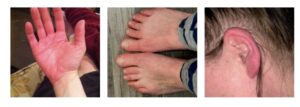
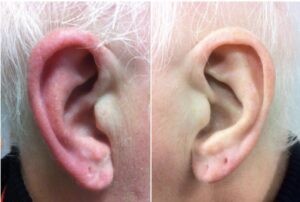
Depending on the specific presentation, the condition can be classified as either primary or secondary [cite: 1634]: * **Primary Forms:** These are often driven by internal, inherited factors, such as specific genetic mutations in the **SCN9A gene** (for primary erythromelalgia) or a genetic link to migraine headaches (for primary RES) [cite: 1590, 1594]. The SCN9A gene provides instructions for making a sodium channel protein that is crucial for normal nerve cell pain signaling [cite: 1643]. * **Secondary Forms:** These arise as a direct reactive phenomenon triggered by an underlying systemic disorder, such as bone marrow myeloproliferative diseases, cervical spine misalignment, or a history of long-term topical steroid use [cite: 1591, 1595, 1601]. You can think of a burning red pain attack as an “isolated sensory circuit overload.” Identifying the structural triggers behind your specific variant early through a holistic clinical assessment is the essential “So What?” factor in your care plan [cite: 1620]. Pinpointing whether your symptoms are primary or secondary prevents unnecessary medical delays and guides your provider toward the correct step-wise treatment pathway [cite: 1623, 1634].
Understanding the Spectrum: The Three Burning Red Pain Conditions
Burning red pain syndromes present with overlapping physical features but restrict their boundaries to distinct, specific anatomical regions. Recognizing these clear boundaries prevents clinical confusion [cite: 1633, 1635].
| Condition Type | Key Differentiators and Local Visual Profiles |
|---|---|
| Erythromelalgia | Appearance & Location: Restricts its profile primarily to the extremities, targeting the feet and hands symmetrically [cite: 1585]. During active flare attacks, the skin becomes intensely hot, swollen, tender, dusky red, and sometimes visibly mottled [cite: 1580]. |
| Red Ear Syndrome (RES) | Appearance & Location: Localized strictly to the external ear structures [cite: 1586]. It manifests as sudden episodes of intense, painful, and bright red flushing of one or both ears [cite: 1581]. |
| Red Scrotum Syndrome | Appearance & Location: Restricts its presentation to the male external genitalia, populating the scrotum, penile shaft, glans, or foreskin [cite: 1582, 1587]. It is characterized by persistent burning, warm or hot sensations, and a marked hypersensitivity to touch (hyperesthesia) [cite: 1582, 1647]. Remarkably, physical exams may sometimes reveal completely normal-appearing skin despite intense internal discomfort [cite: 1583]. |
Am I at risk for burning red pain complications or underlying disorders?
Developing a burning red pain syndrome is a complex medical event that skews toward specific gender lines, age categories, and underlying disease histories [cite: 1590, 1591, 1594, 1595].
- Myeloproliferative Disease Risks: If you suffer from secondary erythromelalgia, you face a strong, documented risk for an underlying myeloproliferative disorder, such as **polycythemia vera** (overproduction of red blood cells) or **essential thrombocythemia** (excessive platelets) [cite: 1591, 1641, 1642]. Crucially, your burning skin symptoms can manifest months or years *before* the bone marrow condition can be detected on standard laboratory panels [cite: 1592].
- The Red Ear Demographics: Susceptibility for Red Ear Syndrome follows distinct clinical age split lines [cite: 1594, 1595]. Primary RES peaks predominantly in young boys and features a strong genetic tie to a history of **migraine headaches** [cite: 1594, 1600]. Conversely, secondary RES skews heavily toward adult women and is directly linked to structural **cervical spine disease** or temporomandibular joint (TMJ) issues [cite: 1595, 1600].
- The Topical Steroid Trap: For individuals dealing with Red Scrotum Syndrome, a primary risk trigger is a prior history of applying **topical corticosteroid creams** to the genital area [cite: 1596, 1601]. Prolonged use can alter local blood vessel responses, trapping the tissue in a state of rebound dilation and hypersensitivity [cite: 1582, 1596].
- The Shared Female Mechanism: From a clinical perspective, Red Scrotum Syndrome shares a nearly identical behavioral and nerve-misfiring template with **vulvodynia** (chronic vulvar pain) in women, suggesting a shared neuroinflammatory highway between genders [cite: 1597, 1648].
Where and How It Appears on My Body
Burning red pain syndromes map themselves across precise, highly isolated anatomical corridors, displaying clear landmarks that help your dermatology team differentiate them from simple structural skin infections [cite: 1633, 1635].
- The Foot and Hand Anchor: Erythromelalgia lesions follow a highly symmetric path, primarily clustering on the soles of the feet and the palms of the hands [cite: 1585]. Attacks are classically triggered by ambient heat, physical exercise, or allowing the limbs to hang downward [cite: 1579, 1580].
- The Auricular Mapping: Red Ear Syndrome restricts its boundaries to the cartilage and lobe lines of the ear, frequently triggered by simple physical contact, turning the head, or temperature fluctuations [cite: 1581, 1586, 1644].
- The Genital Hyperesthesia Zone: Red Scrotum Syndrome places its visual landmarks across the anterior surface of the scrotum and penile shaft [cite: 1582, 1587]. The area exhibits a profound sensitivity to touch—even the light friction of everyday clothing or underwear can trigger an intense, burning flare [cite: 1582, 1583].
- Muted Complexion Clues: On deeper skin tones, the bright crimson redness of a flare may look muted, dusky purple, or matted dark brown [cite: 1580]. On skin of color, evaluating localized skin temperature (feeling if the hands, ears, or feet are noticeably hot to the touch) and tracking swelling are vital clinical indicators used to confirm an active attack [cite: 1579, 1580].
Solutions I Can Try at Home
Because these syndromes are driven by internal nerve signaling and neurovascular dilation, standard over-the-counter anti-itch lotions provide zero relief [cite: 1579, 1596]. At-home support focuses on keeping your micro-climate cool and protecting thinned, sensitive areas from friction [cite: 1580, 1583].
- Maintain a Cool, Regulated Environment: Keep your indoor living spaces cool using fans or air conditioning, particularly during warm seasons. Cooling your immediate environment helps prevent the sudden blood vessel widening that initiates an agonizing burning attack [cite: 1579, 1580].
- Avoid Immediate Cold-Water Submersion: While plunging your burning hands or feet into ice water provides rapid, temporary numbing relief, **you must avoid this habit completely**. Repeated ice submersion causes severe rebound blood vessel widening, breaks down your skin barrier lines, leads to non-healing open sores, and can worsen nerve injury [cite: 1215].
- Gently Track Attack Triggers: Keep a careful written log of your flare-ups. Documenting whether an ear flush is triggered by chewing (pointing to a TMJ link) or if a foot flare follows heavy walking provides your clinical team with essential diagnostic clues to find the root cause [cite: 1595, 1603].
- Eliminate Trigger Creams Safely: If you are dealing with genital burning, stop applying all over-the-counter hydrocortisone or prescription steroid creams immediately [cite: 1596]. Let the skin tissue safely wean away from these chemical dilators under your provider’s guidance [cite: 1596, 1601].
When Should I See a Dermatology Provider?
Burning red pain syndromes are highly complex neurovascular conditions that require structured medical management [cite: 1629]. Seeking professional clinical triage early ensures you get a precise diagnosis through an exhaustive testing algorithm and rules out dangerous lookalikes [cite: 1603, 1620].
Seek Professional Help if You Notice These Warning Signs:
- Unmanageable, Sleep-Disrupting Pain: The intense burning sensation in your limbs, ears, or genitalia grows severe enough to disrupt your normal sleep cycles or causes deep emotional distress [cite: 1579, 1582].
- Diagnostic Uncertainty: You are struggling with unyielding skin redness and heat that mimics common infections like cellulitis, urticaria, or Sweet syndrome, requiring a diagnostic **office skin biopsy** and extensive laboratory blood panels to establish clarity [cite: 1609, 1621].
- Signs of an Underlying Bone Marrow Shift: Your limb-directed burning attacks are accompanied by unexplained fatigue, regular drenching night sweats, or a ruddy facial complexion, indicating a potential myeloproliferative disorder that requires immediate blood evaluation [cite: 1591, 1640].
Frequently Asked Questions
- Q: What comprehensive laboratory and imaging workup is required to safely evaluate these conditions?
A: Because these syndromes are frequently secondary to internal disorders, your provider will order an exhaustive testing panel to pinpoint the underlying cause [cite: 1603, 1634]. Your baseline blood work will include a Complete Blood Count (CBC) to screen for bone marrow diseases, a Comprehensive Metabolic Panel (CMP-14), and an Antinuclear Antibody (ANA) test [cite: 1604]. For Red Scrotum Syndrome, your provider will explicitly run a serological **RPR for syphilis, gonorrhea screenings, HSV 1 & 2 IgG blood tests with reflex, and an HIV panel** [cite: 1605]. To identify structural triggers, your team will order comprehensive **imaging profiles of the back, pelvis, and cervical spine**, alongside specific assessments to evaluate for TMJ joint misalignment [cite: 1610]. Contact allergen patch tests may also be incorporated [cite: 1608]. - Q: What strict step-wise oral prescription protocol is used to calm primary burning pain?
A: For primary forms of these neurovascular disorders, your dermatologist will execute a highly structured, **3-step systemic medication algorithm** to stabilize nerve activity and block overactive pain pathways [cite: 1623, 1652]:
- Step 1: Your provider will start you on oral **Mexiletine at 200 mg daily** [cite: 1624]. If your pain persists, they will safely escalate the dose by 100–200 mg daily up to a strict **maximum of 600 mg daily** [cite: 1624].
- Step 2: If Mexiletine alone is insufficient, your provider will add **Carbamazepine starting at 100 mg daily**, gradually titrating upward in 100–200 mg steps to a **maximum of 800 mg daily** [cite: 1625, 1653].
- Step 3: If acute breakthrough pain attacks continue, your provider will layer in oral **Rizatriptan (5–10 mg per attack)**, strictly limited to a **maximum of two doses per day** with at least two hours of separation between doses [cite: 1626, 1654].
- Q: What alternative medical therapy options exist if the primary step-wise routine fails?
A: If the primary 3-step sodium-channel protocol fails to manage your symptoms, your clinician can explore alternative therapeutic interventions [cite: 1627]. A highly effective alternative includes a long-term course of oral **Indomethacin (50 mg taken 2 to 3 times daily) maintained for 6 full months** [cite: 1627]. After achieving successful control at the 6-month mark, your provider will smoothly **wean you off the medication over a 1-month period** [cite: 1627]. If you are prescribed long-term Indomethacin, your team will monitor you closely for potential clinical side effects, specifically localized gastritis or severe headaches [cite: 1627].
The long-term outlook for burning red pain syndromes varies depending on your individual response to therapy and identifying any underlying secondary conditions [cite: 1630]. While these syndromes are complex and require meticulous tracking, working through modern step-wise neurovascular protocols can successfully minimize active attacks, protect your skin barrier lines, and significantly improve your quality of life [cite: 1623, 1629, 1631]. Success relies on strict trigger avoidance, maintaining a cool micro-climate, and an enduring partnership with your interprofessional dermatology team to keep your body safe and comfortable [cite: 1580, 1620].