
Quick Summary: Freckles, solar lentigines (sun spots), lentigo simplex, and café-au-lait macules are benign pigmentary skin landmarks that cause flat brown or tan spots. While they are completely harmless on their own, recognizing their behavior and protecting your skin from UV radiation is essential for managing your long-term skin health.
What Is Causing These Flat Brown Spots?
Understanding how your skin cells produce and distribute pigment is a strategic first step in managing flat spots. Your skin contains melanocytes, which produce a protective dark pigment called melanin. These brown marks are caused by two different mechanisms: some are an overproduction of melanin within your normal skin cells (like freckles and café-au-lait spots), while others result from an actual increase in the number of pigment cells (like sun spots and lentigo simplex).
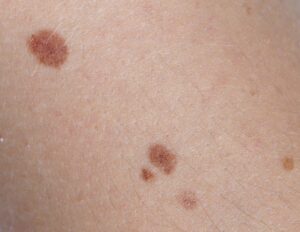
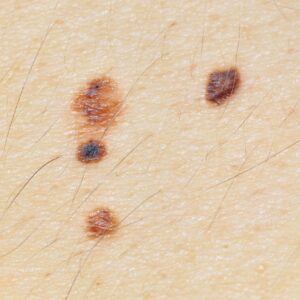
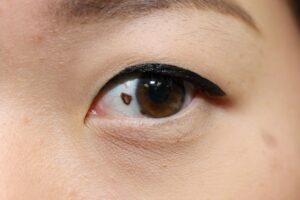
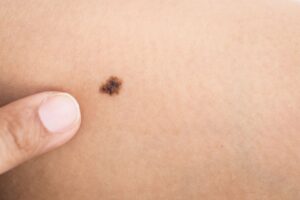
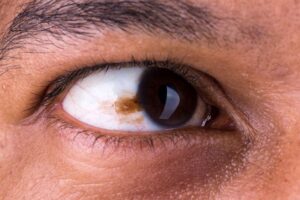
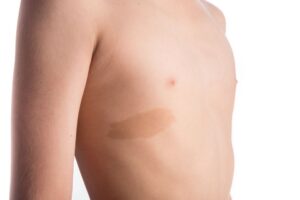
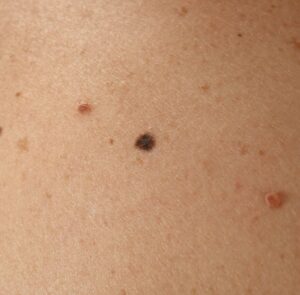
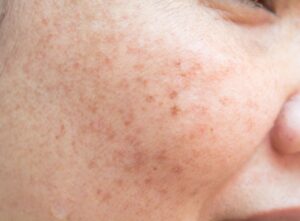
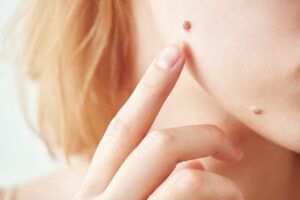
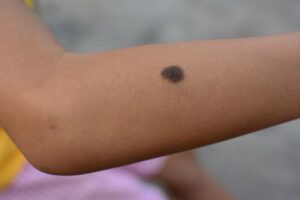
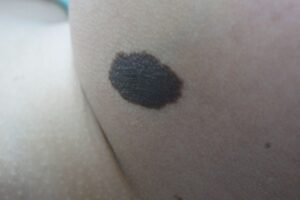
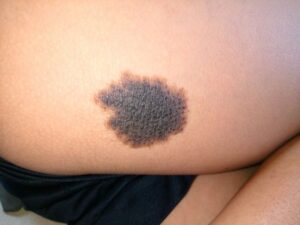
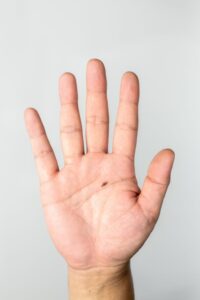
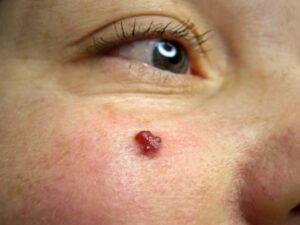
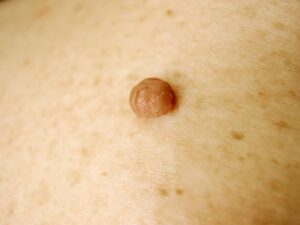
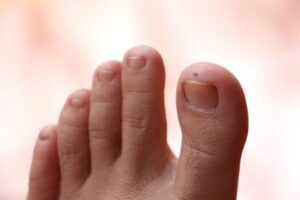
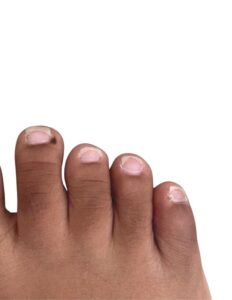
The root cause of many flat marks is a biological reaction to ultraviolet (UV) radiation or your genetic blueprint. You can think of sun-induced spots as a “protective shield response”—your skin darkens to defend your DNA from cellular injury. Identifying whether a spot fades in winter or stays the same year-round is the “So What?” factor in managing its appearance and tracking sun damage.
Understanding the Types: A Comparative Guide to Flat Marks
Flat brown marks look similar but behave differently based on their root cause. Distinguishing their patterns helps guide your sun protection routine.
Spot Type | Key Characteristics and Behavior |
|---|---|
| Freckles (Ephelides) | Small (1-3mm), light to dark brown spots that emerge in childhood. They darken significantly with sun exposure in the summer and fade noticeably in the winter. |
| Sun Spots (Solar Lentigines) | Larger brown spots (often greater than 5mm) with irregular borders. They appear later in life due to chronic sun damage and remain the same color year-round. |
| Lentigo Simplex | Small (less than 5mm), uniformly dark brown or black spots. They arise early in life on any skin surface, are unrelated to sun exposure, and do not change color with the seasons. |
| Café-Au-Lait Macules | Flat, smooth, uniformly light-brown patches that vary in size (2-5cm or larger). They are present at birth or develop in early childhood and are entirely non-cancerous. |
Am I at risk for developing these flat brown spots?
Flat brown marks are a common part of your genetic makeup and your history of exposure to daylight.
- Genetics and Complexion: If you have fair skin, red or blonde hair, and blue or green eyes, your genetic profile makes you highly susceptible to freckling and sun-induced spots.
- Chronically Exposed Zones: Spending long hours outdoors or using tanning beds increases your risk of developing numerous sun spots, which act as a direct biological marker of long-term skin damage.
- Hormones and Underlying Conditions: Certain flat spots, like café-au-lait macules, arise from spontaneous prenatal genetic shifts. While having a few is completely normal, having six or more large café-au-lait spots can be a marker for underlying genetic conditions like Neurofibromatosis Type 1.
Where and How They Appear on My Body
Each type of flat pigmentary mark leaves a specific “map” across the skin that helps providers distinguish them during a professional skin exam.
- The Sun Corridor: Freckles and sun spots group heavily on sun-exposed zones—predominantly the face, the backs of the hands (dorsal aspects), the forearms, and the upper chest and back. They never populate mucous membranes.
- The Non-Sun Map: Lentigo simplex can appear anywhere, including non-sun-exposed skin, nail beds, palms, soles, and mucous membranes (like the vermilion border of the lips or oral cavity).
- Hazy vs. Sharp Borders: Freckles have soft, blended outlines, while sun spots and lentigo simplex demonstrate well-defined borders. Café-au-lait spots have large, smooth, continuous edges.
Solutions I Can Try at Home
Consistent daily protection is the foundation of preventing new marks from forming and helping existing sun-induced spots fade over time.
- Diligent Sun Protection: This is the single most vital tool. Wear broad-spectrum, daily zinc sunscreen on all exposed skin, and protect your face and neck with wide-brimmed hats and sunglasses.
- Sun Avoidance: Minimizing peak daylight exposure helps the lighter skin of freckles blend in more quickly with the adjacent skin, preventing the dramatic summer darkening cycle.
- Over-the-Counter Lighteners: For cosmetic fading of sun spots, consider non-prescription options containing Vitamin C, Vitamin E, or retinoids to gently support an even skin tone and repair dry surface cells.
When Should I See a Dermatology Provider?
A professional evaluation is important to ensure your flat brown spots are completely benign and to rule out serious conditions that mimic sun spots, such as lentigo maligna (melanoma in situ).
Seek Professional Help if You Notice These “Red Flags”:
- The ABCDE Changes: A flat brown spot becomes asymmetrical, develops an irregular, notched, or blurred border, displays multiple colors (shades of black, brown, red, or gray), or grows larger than 6mm.
- The “Ugly Duckling” Sign: An isolated dark spot looks completely different from all your surrounding freckles or moles, or begins changing rapidly in size and shape.
- Mucosal or Nail Bed Shifts: A new, growing, or mottled dark band appears in your nail bed (longitudinal melanonychia), on your lips, or inside your mouth.
- Multiple Large Patches: You or your child have six or more large café-au-lait spots, requiring evaluation to rule out systemic genetic disorders.
Frequently Asked Questions
- Q: Can freckles or sun spots turn into skin cancer?
A: No. True freckles and solar lentigines are entirely benign and do not turn into skin cancer. However, sun spots are a direct marker of significant UV exposure, which means individuals with many sun spots are at a statistically higher risk for developing separate skin cancers like melanoma or basal cell carcinoma in those same sun-damaged areas. - Q: What options exist to remove these spots for cosmetic reasons?
A: If you wish to lighten or clear cosmetic sun spots, a dermatology provider can offer effective in-office treatments, such as precise liquid nitrogen cryotherapy, moderate chemical peels, or specialized Intense Pulsed Light (IPL) and fractionated laser therapies. - Q: What are these multiple dark spots in a child accompanied by other symptoms?
A: Rare syndromes like Multiple Lentigines Syndrome (LEOPARD syndrome) cause multiple dark macules across both sun-exposed and protected areas from infancy. These are accompanied by internal developmental signs like hearing issues, growth variations, or cardiac conduction defects, requiring multidisciplinary medical tracking.
The long-term outlook for these flat brown spots is excellent, as they are non-threatening skin traits. Success lies in rigorous daily sun protection, routine self-skin monitoring, and regular clinical evaluations to ensure your skin remains healthy and stable.