
Quick Summary: Stasis dermatitis is an inflammatory skin condition caused by poor circulation in the lower legs. Management requires treating the skin with moisturizers and addressing circulation through compression and elevation.
Why Are My Lower Legs Red and Swollen?
This condition occurs when the valves in your leg veins weaken, causing blood to pool (stasis). This pressure causes tiny capillaries to leak, triggering inflammation and skin changes from the inside out.
Podcast:
Learn More About Stasis Dermatitis
Understanding the Progression: Early vs. Chronic
Phase | Key Characteristics |
|---|---|
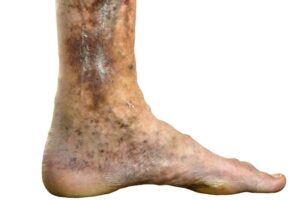
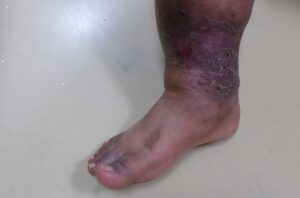
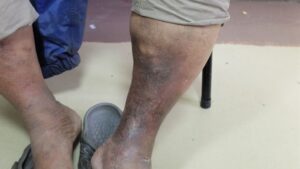
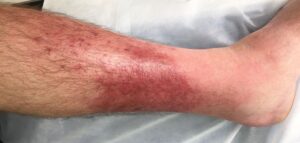
| Early Phase | Redness, swelling, and orange-brown “cayenne pepper” speckles. |
| Chronic Phase | Thickened, woody skin and narrowing of the ankles (“inverted champagne bottle” look). |
Am I at risk for stasis dermatitis?
This condition is a common result of vascular health changes over time.
- Age Over 50: Vein valves naturally lose strength.
- Prolonged Sitting/Standing: Gravity makes blood return harder.
- Medical History: History of blood clots, varicose veins, or high blood pressure.
Where and How It Appears on My Body
- The Ankles & Shins: The primary areas where blood pooling occurs.
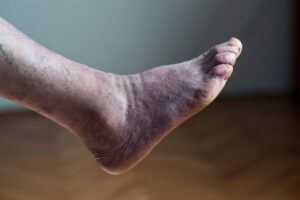
- Orange-Brown Staining: Permanent haemosiderin staining from leaked red blood cells.
- Symmetry: Typically affects both legs.
Solutions I Can Try at Home
- Compression is Essential: Wear prescribed compression stockings daily.
- Elevate Above the Heart: Raise your feet for 15 minutes, several times a day.
- Maintain Moisture: Use thick ointments to prevent skin from cracking and infection.
When Should I See a Dermatology Provider?
Seek Professional Help if You Notice These “Red Flags”:
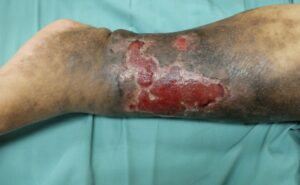
- Open Sores: Slow-healing ulcers on the ankles or legs.
- Sudden Swelling: One leg significantly more swollen than the other.
- Signs of Infection: Sudden pain, warmth, or red streaks.
Frequently Asked Questions
- Q: Is the brownish stain permanent?
A: Often yes, as it is iron staining in the skin, but management prevents it from worsening. - Q: Can I just use a cream?
A: Creams help the surface, but compression and elevation are the most important treatments.
The long-term outlook for stasis dermatitis depends on consistent lifestyle management. By making compression and elevation part of your routine, you can maintain healthy skin.