
Quick Summary: Atopic dermatitis is a chronic, inflammatory skin condition driven by a weakened skin barrier and an overactive immune system, resulting in intense itching and red, scaly rashes. The most effective management involves aggressive moisture replenishment (restoring the "mortar"), identifying triggers, and working with a dermatology provider to calm the immune response.
What Is Causing My Itchy Rash?
Understanding the biology of your skin is a strategic first step in managing atopic dermatitis. Our skin acts as a protective shield, but in atopic dermatitis, this shield is compromised. You can think of your skin cells as “bricks” and the natural oils as “mortar.” When the mortar is thin or missing, moisture escapes and irritants “leak” in, causing the immune system to launch an inflammatory response.
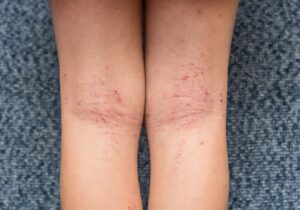
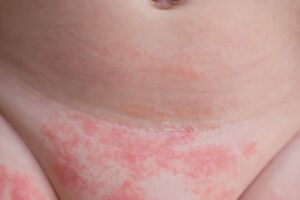
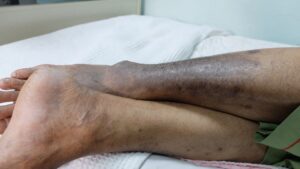
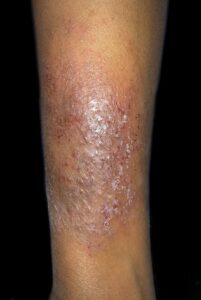
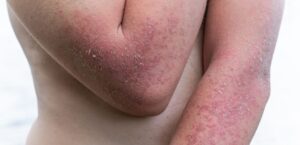
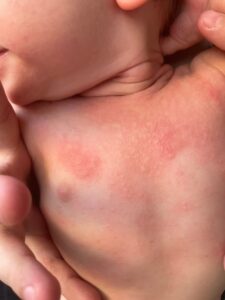
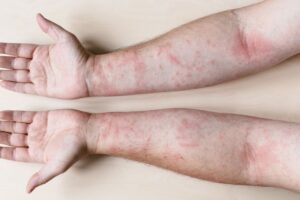
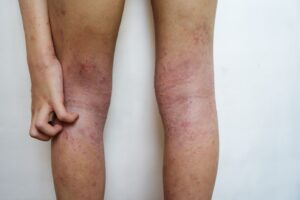
Because everyone’s skin is different, the appearance of this rash can vary; depending on your skin tone, the affected area may appear pink, red, purple, brown, or grayish. The primary goal of treatment is to repair the barrier and quiet the “misguided guards” of the immune system.
Podcast:
Learn More About Atopic Dermatitis
Understanding the Condition: Acute vs. Chronic
Atopic dermatitis often changes its appearance over time. Distinguishing between a sudden flare and long-term changes helps in choosing the right recovery path.
| Phase | Key Characteristics |
|---|---|
| Acute (Flare) | Appearance: Intense redness, severe itching, and sometimes “weeping” or oozing clear fluid. |
| Chronic | Appearance: Lichenification (thickened, leathery skin) and exaggerated skin markings from repeated scratching. |
Am I at risk for atopic dermatitis?
If you or your child are struggling with this condition, remember that atopic dermatitis is not a reflection of hygiene. It is a biological predisposition. Anyone can develop it, but it follows a well-documented genetic pattern.
- The “Atopic March”: Having family members with eczema, asthma, or hay fever significantly increases your risk.
- Infants & Children: It most commonly begins in infancy, often starting on the cheeks and scalp.
- Skin Barrier Genetics: Many patients have a natural deficiency in a protein called filaggrin, which helps the skin stay hydrated.
Where and How It Appears on My Body
The “map” of atopic dermatitis changes as we age, helping providers reach a definitive diagnosis based on location.
- Infancy (0-2 years): Rashes typically focus on the cheeks, scalp, and the fronts of the knees and elbows.
- Childhood: The rash shifts to the “flexures”—the inside of the elbows and the back of the knees.
- Adulthood: Chronic, thickened patches often appear on the hands, neck, and around the eyes.
Solutions I Can Try at Home
Consistent daily self-care is the foundation of repairing the skin barrier and preventing future flare-ups.
- The 3-Minute Rule: Within three minutes of a lukewarm bath, apply a thick, fragrance-free ointment to trap moisture.
- Fragrance-Free Living: Avoid scented soaps and laundry detergents. Look for products with the “NEA Seal of Acceptance.”
- Control the Itch: Keep fingernails short to prevent skin damage from unconscious scratching.
When Should I See a Dermatology Provider?
A professional diagnosis is necessary when the barrier is significantly broken or the immune response is too strong for at-home care.
Seek Professional Help if You Notice These “Red Flags”:
- Secondary Infection: You notice honey-colored crusting, pus, or streaks of redness.
- Eczema Herpeticum: Sudden appearance of clusters of painful, fluid-filled blisters (seek immediate care).
- Failed Home Care: Over-the-counter moisturizers provide no relief after one week.
Frequently Asked Questions
- Q: Can I catch eczema from someone?
A: No. It is an internal inflammatory and genetic condition. It cannot be spread from person to person. - Q: Are food allergies causing my rash?
A: In children, food can be a trigger, but restoring the skin barrier is usually the more effective path to relief.
The long-term outlook for atopic dermatitis is positive. Many children “grow out” of the condition, and for adults, modern treatments can provide excellent control. Success lies in consistent barrier support and early management of flares.