
Fungal Folliculitis vs. Acne
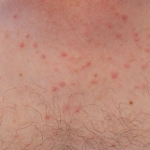
If you have small, pinpoint, often uniform bumps on your chest and back that don’t respond to typical acne treatment, you may be battling Fungal Folliculitis—most commonly caused by the Malassezia yeast. This condition is caused by an overgrowth of yeast in the hair follicle, often promoted by sweat, heat, and occlusive products.
Crucially: This Is NOT Acne! Using typical acne treatments (like Salicylic Acid or BPO) without an anti-fungal component often makes the issue worse, as it doesn’t address the underlying yeast overgrowth.
Why It's NOT Acne (The Key Difference)
Acne includes lesions like comedones (blackheads/whiteheads).
Fungal Folliculitis is typically monomorphic (all one type of lesion) and often intensely itchy.
It is centered on hair follicles and often lacks the variety of lesions seen in acne.
Bacterial vs. Fungal Folliculitis: How to Tell
Bacterial (e.g., Staph): Often seen in shaved areas (face/beard, legs, groin). Treatment requires topical or oral antibiotics.
Fungal Malassezia: Most common on the chest, back, and shoulders. Treatment requires anti-fungals (topical or oral).
What Causes Fungal Folliculitis?
The culprit is the Malassezia yeast (also known as Pityrosporum).
Lifestyle Triggers: Regularly wearing clothing that traps heat and sweat.
Product Trigger: Occlusion from heavy ointments and moisturizers can encourage yeast overgrowth.
If your bumps are uniform, itchy, and mainly on your chest, you need an anti-fungal approach, not an acne approach.
experience self care & build community. let's trust the process together.
Want to see past topics?
You can explore the full Skin 2000 Club archives here. Stay tuned for Treatment Thursday where we discuss the Anti-Fungal approach for Fungal Follicultiis.