
The Varicella Zoster Virus (VZV) is a common, highly contagious herpesvirus responsible for two distinct clinical conditions over an individual's lifetime: Chickenpox (Varicella) and Shingles (Herpes Zoster). While chickenpox represents the initial, widespread infection, shingles occurs decades later when the dormant virus reactivates inside your nervous system, erupting into a painful, blistering rash. Understanding the biological lifecycle of VZV is a strategic first step toward securing timely medical treatment, accelerating your healing timeline, and protecting yourself against long-term neurological complications.
What Is Causing My Blistering Skin Rash?
Understanding how the Varicella Zoster Virus navigates your body’s immune and nervous systems is a strategic first step in managing your symptoms. When an individual contracts VZV for the first time—typically in childhood—the virus multiplies rapidly, resulting in the widespread, itchy blisters of chickenpox. After your immune system safely suppresses this initial infection, the virus does not leave your body. Instead, it enters a dormant (latent) state, retreating down the nerve paths to hibernate permanently inside your nerve roots (sensory ganglia).
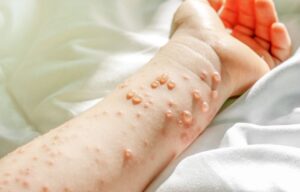
Decades later, alterations in your immune baseline can prompt the sleeping virus to suddenly wake up. You can think of shingles as an “internal viral breakout” that travels directly down the path of a single nerve fiber straight to your skin. As it multiplies along the nerve, it causes intense localized neural inflammation and erupts on the surface as a clustered, painful blister rash. Identifying this condition early through professional clinical monitoring is the essential “So What?” factor in your recovery plan, as starting prescription systemic antivirals within the first 72 hours of the rash arriving is the only reliable way to shorten the outbreak and shield the nerve from permanent structural damage.
Understanding the VZV Spectrum: Chickenpox vs. Shingles
Varicella Zoster virus exhibits completely different physical layouts depending on whether your body is experiencing the primary infection or a secondary reactivation.
| Clinical Condition | Key Differentiators and Visual Configurations |
|---|---|
Chickenpox (Varicella) | Appearance: A highly widespread, scattered eruption featuring hundreds of intensely itchy, fluid-filled blisters resting on an inflamed red base—traditionally described as “dewdrops on a rose petal.” Spots present simultaneously in all different stages of evolution (new red bumps, active blisters, and dry crusty scabs). Sensation: Dominated by an intense, generalized surface itch. |
Shingles (Herpes Zoster) | Appearance: A localized, dense cluster of fluid-filled blisters that form a strict, continuous ribbon-like band along a single side of the body. Unlike chickenpox, lesions do not spread randomly; they are bound to a single nerve pathway (dermatome). Sensation: Dominated by severe, localized neural pain that can feel like burning, shooting, stabbing, or electrical shocks, which routinely starts 1 to 5 days *before* any visible rash erupts. |
Am I at risk for complications or long-term nerve pain?
Developing shingles or chickenpox complications is driven by internal immune changes and genetic viral stability rather than personal lifestyle factors.
- The Age Factor: While chickenpox is a pediatric event, shingles predominantly targets adults, with the risk rising dramatically after the age of 50 due to a natural, age-related decline in viral immunity (immunosenescence).
- Altered Immune Baselines: Individuals with compromised systemic immunity—such as those undergoing cancer chemotherapy, living with HIV, or using systemic immunosuppressive medications—are at a highly elevated risk for severe, multi-dermatomal, or internally disseminated shingles.
- The Post-Herpetic Neuralgia (PHN) Risk: The most common long-term complication of shingles is PHN, where severe burning pain persists in the affected nerve path for months or years after the skin blisters have completely healed. Having severe pain during the first week of the rash significantly increases your statistical risk for developing PHN.
- The Hutchinson’s Sign Threat: If a shingles breakout targets the ophthalmic branch of the trigeminal nerve, blisters will form directly on the tip or side of the nose (Hutchinson’s sign). This is a critical medical indicator that the virus has entered the eye structure, posing an immediate threat of permanent blindness if not treated instantly by an ophthalmologist.
Where and How It Appears on My Body
VZV lesions follow a strict anatomical map across the body surface, dictated entirely by the hidden architecture of your peripheral nervous system.
- Strict One-Sided Boundaries (Unilateral Layout): Shingles blisters respect the midline of your body perfectly. They wrap around one side of the chest, back, or abdomen in a sharp band, stopping precisely at the center line of your sternum or spine.
- The Thoracic Hotspot: The thoracic dermatomes (ribcage and mid-back) represent the most common target zones for shingles reactivation, followed closely by the lumbar lower back and facial cranial nerves.
- The Blister Lifecycle: Shingles spots begin as firm red bumps, transform into clear fluid-filled blisters over 3 to 5 days, turn cloudy or yellowish, and finally rupture into open sores before forming hard crusts that flake off within 2 to 4 weeks.
- Muted Complexions and Shadows: On deeper skin complexions, the classic bright red base beneath the blisters can look muted, dark brown, or deep purple. As shingles heals, it frequently leaves behind long-lasting light marks (hypopigmentation) or dark architectural scars mapping the old nerve path.
Solutions I Can Try at Home
Because VZV is an internal, actively replicating viral condition, home care focuses on supporting your skin-directed comfort, keeping lesions dry, and soothing local nerve irritation.
- Speed Up Surface Drying: For active, weeping, or blistering sores, apply cool compresses soaked in a **5% aluminum acetate solution (such as Domeboro’s solution)** up to four times a day. This specialized compound safely accelerates the drying of the blisters, eases surface heat, and cleanly removes crusts without ripping the skin.
- Protect the Blister Barrier: Keep active sores lightly covered with sterile, non-stick bandages to prevent clothing friction. Never attempt to manually pop or squeeze the fluid-filled blisters, as this will introduce skin-surface bacteria and lead to permanent scarring.
- Minimize Transmission: While you cannot pass shingles to someone else, the fluid inside the active blisters contains live viral particles. If an individual who has never had chickenpox or the varicella vaccine touches this fluid, they can contract the virus and develop widespread chickenpox. Keep the rash covered and avoid contact with pregnant women, infants, and immunosuppressed individuals until all sores are fully crusted over.
When Should I See a Dermatology Provider?
Varicella zoster reactivations require swift clinical management. Seeking professional medical triage early is vital to get the correct prescription antiviral tablets before the 72-hour gold standard window closes.
Seek Immediate Medical Help if You Notice These Warning Signs:
- Blisters on Your Nose or Near Your Eye: You develop painful bumps on the tip or side of your nose, your eyelid, or experience any sudden eye redness or vision shifts, requiring immediate emergency eye triage to protect your sight.
- Excruciating, Intolerable Pain: Your localized zoster pain is so agonizing that it cannot be managed with standard therapies, requiring an immediate clinical referral to an anesthesiologist or a specialized pain clinic for a nerve block or epidural block to calm the nerve.
- Widespread Viral Spread: Active blisters begin popping up randomly outside the primary band across multiple distant areas of your body, indicating a dangerous internal dissemination of the virus.
- Signs of Secondary Bacterial Invasion: The active sores become increasingly hot, swollen, exquisitely tender, or drain thick, foul-smelling yellow pus, suggesting a secondary bacterial skin infection requiring clinical antibiotics.
Frequently Asked Questions
- Q: What primary medications will my provider prescribe for acute shingles?
A: To aggressively halt viral multiplication and reduce acute zoster pain, your provider will prescribe a 7-day course of systemic oral antivirals, such as **Valacyclovir (1 gram taken three times daily, dispensing 21 tablets)** or **Famciclovir (1 gram taken three times daily, dispensing 21 tablets)**. These modern prodrugs are preferred over older acyclovir tablets because they possess significantly enhanced internal bioavailability and require easier daily dosing, leading to superior treatment compliance. For healthy pediatric patients with uncomplicated primary chickenpox, your provider will utilize weight-based dosing calculated precisely at **Acyclovir 20 mg/kg four times a day (up to a maximum of 800 mg four times a day) for 7 to 10 days**. All antiviral dosages must be carefully adjusted by your provider if you have underlying renal (kidney) impairment. - Q: How is severe, acute shingles pain managed in the office?
A: If you are experiencing moderate-to-severe pain during the active breakout, your provider may supplement your antiviral course with a targeted three-week taper of systemic corticosteroids (starting at 1 mg/kg of prednisone during the first week and titrating down over the next two weeks) to rapidly quiet nerve inflammation. Crucially, **corticosteroids must never be started without an antiviral medication**, as steroids alone can cause the virus to spread unchecked. For localized surface pain, your provider will prescribe a box of **Lidoderm (Lidocaine) 5% patches**, with instructions to place up to 3 patches directly over the affected area for up to 12 hours within a 24-hour period (12 hours on, 12 hours off). - Q: What specialized treatment plan exists if I develop chronic Post-Herpetic Neuralgia (PHN)?
A: If your nerve pain persists long after the skin rash completely clears, your dermatology or pain management team will initiate a structured neurological medication plan. First-line clinical options include **Amitriptyline (Elavil)**, started at 25mg nightly and gradually titrated up to 50mg twice daily as tolerated—though it is strictly contraindicated in patients with underlying cardiac disease due to arrhythmia risks. Alternatively, your provider will utilize **Neurontin (gabapentin)**, executing a strict step-up schedule: 300 mg on Day 1, 600 mg on Day 2, and 900 mg on Day 3 divided with meals, titrating upward thereafter while monitoring for dizziness or fluid swelling (peripheral edema). Lyrica (pregabalin) can also be initiated starting at 150mg daily divided every 12 hours.
The long-term outlook for the vast majority of varicella zoster patients is excellent, with modern oral antivirals enabling swift skin clearing and complete recovery. Success relies on initiating prescription medical care within the first 72 hours, using drying compresses on open sores, protecting the nerve lines through optimized pain care, and keeping up with regular follow-ups with your interprofessional dermatology team to maintain your health.