
Quick Summary: Lichen nitidus is a rare, benign skin condition that causes clusters of tiny, glinting, pinhead-sized bumps on the skin. It is a completely harmless, self-limiting condition that typically clears entirely on its own over time, meaning a gentle, supportive monitoring strategy is often the most strategic path to a clear recovery.
What Is Causing These Tiny, Shiny Bumps?
Understanding how localized skin cell activity behaves under the surface is a strategic first step in identifying lichen nitidus. The exact cause of this condition remains unknown, but it is recognized as a unique inflammatory reaction. When your skin undergoes this response, immune cells group together closely just beneath the surface, pushing the top layer of skin upward to create small, highly structured, uniform papules.
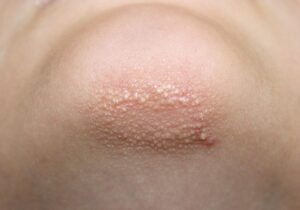
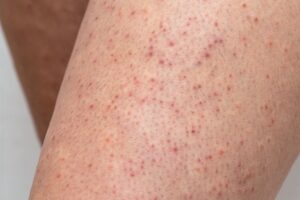
The development of lichen nitidus can be thought of as a harmless, temporary skin variation. It is an internal, biological response and is completely non-contagious. Identifying these tiny landmarks early provides peace of mind, allowing you to avoid aggressive, unnecessary scrubbing and confidently allow your skin to complete its natural healing timeline.
The Microscopic View: The Ball-and-Claw Architectural Landmark
While lichen nitidus is identified visually during a routine skin check, its structure has a highly specific cellular arrangement that sets it apart from all other texturized skin rashes.
| Cellular Component | What It Looks Like to a Pathologist |
|---|---|
| The “Ball-and-Claw” Pattern | If a small tissue sample is ever evaluated, it reveals a tight, rounded nest of immune cells (the “ball”) that is closely embraced on both sides by downward extensions of the outer skin layer known as rete ridges (the “claw”). This stable, distinctive microscopic framework confirms a definitive diagnosis of lichen nitidus. |
Am I at risk for lichen nitidus?
Lichen nitidus can affect individuals across all age groups and walks of life, completely independent of dietary habits, personal hygiene, or systemic immune strength.
- Age Profile: While it can surface in adults, it demonstrates a clear statistical preference for children and young adults.
- Race and Gender: There is no documented predilection based on race or sex, meaning it populates all skin tones and backgrounds equally.
- The Trauma Trigger (Koebner Phenomenon): Individuals with active lichen nitidus can develop rows of new bumps along lines of minimal skin injury, such as a scratch, a sunburn, or tight friction.
- Familial Occurrence: While most cases occur randomly and sporadically, rare familial forms have been documented in medical history.
Where and How It Appears on My Body
Lichen nitidus leaves a highly specific physical “map” of tiny milestones across the body that helps your dermatology provider easily recognize the condition.
- Pinhead Dimensions: Look for exceptionally small bumps, measuring a mere 1mm to 3mm in diameter, with a uniform size profile.
- The Glistening Surface: The papules have a flat, smooth, and noticeably shiny or glinting surface, especially when viewed under direct light.
- Coloration Profile: They are typically skin-colored or pale white. On darker skin tones, they can reflect light beautifully as tiny, light-reflecting points.
- Anatomic Hotspots: Bumps tend to group in clusters on the trunk, the inner flexor surfaces of the arms, the backs of the hands (dorsal hands), and the genital region.
Solutions I Can Try at Home
Because lichen nitidus is entirely harmless and clears spontaneously without leaving texturized scars, home care focuses on shielding the skin from trauma and irritation.
- Do Not Scratch or Exfoliate: Trying to aggressively scrub or pick at these tiny nodules will not flatten them; instead, it will invoke the Koebner phenomenon, triggering a straight row of new bumps directly along the scratch mark.
- Keep Skin Cool and Calmed: For instances where mild itching is present, apply cool compresses or lightweight, soothing emollients to quiet the local nerve endings.
- Friction Minimization: Wear loose, breathable cotton clothing to prevent tight waistbands or straps from rubbing against clustered areas on the trunk.
When Should I See a Dermatology Provider?
While the condition is benign, seeking a professional evaluation is the best way to confirm the diagnosis and establish a safe, conservative monitoring plan.
Seek Professional Help if You Notice:
- Intense or Disrupted Itching: The normally calm bumps become intensely pruritic, keeping you awake or disrupting your child’s daily routines.
- Widespread, Aggressive Spreading: The tiny bumps begin multiplying rapidly, covering large surface areas of the limbs and torso.
- Atypical Structural Changes: The lesions lose their flat, shiny appearance, start bleeding, or develop a rough, scaling surface crust.
- Diagnostic Confusion: You are uncertain if the tiny bumps are a viral concern like molluscum or flat warts, or a different condition like keratosis pilaris, and wish to have a definitive evaluation.
Frequently Asked Questions
- Q: How long does it take for lichen nitidus to clear completely?
A: Spontaneous resolution is highly common with this condition. For the majority of individuals, the immune response will naturally quiet down, and the tiny glistening bumps will fade away completely within one to two years without leaving permanent marks. - Q: How do dermatologists choose a treatment if it becomes itchy?
A: The medical strategy is always to use the least potent anti-inflammatory agent necessary to manage the skin’s appearance. Initial options include a short course of a mid-strength topical steroid cream, sometimes combined with a vitamin A derivative like tretinoin or a modern steroid-sparing topical JAK inhibitor to help clear symptomatic areas. - Q: What advanced options exist for rare, severe cases?
A: For extensive, highly resistant presentations that cause extreme cosmetic concern or intense itching, a provider may incorporate specialized narrow-band UVB phototherapy, oral antihistamines like hydroxyzine to break the itch cycle, or oral retinoids (such as isotretinoin or acitretin), though severe cases requiring systemic medications are exceptionally rare.
The long-term outlook for lichen nitidus is outstanding, as it is a safe, surface-level event that resolves naturally without compromising your overall physical health. Success relies on gentle skin support, avoiding friction and trauma, and allowing your skin’s natural regulatory cycle to clear the tiny glistening points smoothly.
Managing Lichen Nitidus is complex and involves focusing on general skin care and working with a dermatology provider to determine the best treatment plan for you.