
1. Introduction: What is This Net-Like Rash?
Discovering a “net-like” or mottled pattern on your skin can be an alarming experience, but please know that you are not alone. While the appearance of this rash—clinically known as Erythema Ab Igne (EAI)—is distinct and often startling, understanding where it comes from is your first and most important step toward healing. Recognizing these changes early is the best way to ensure your skin returns to its natural state and to prevent temporary discoloration from becoming a permanent change in texture or pigment.
Podcast:
Learn More About Erythema Ab Igne
Erythema Ab Igne is what we call a “thermal dermatosis.” In simpler terms, it is a skin condition caused by chronic exposure to heat. Unlike a typical thermal burn, which happens instantly when you touch something very hot, EAI is caused by heat that isn’t quite hot enough to blister your skin immediately, but is high enough to cause damage over a long period of time. It is a slow, cumulative reaction to temperatures that feel “toasty” rather than “burning.”
Identifying the specific habits or heat sources in your daily life that are triggering this reaction is the key to stopping the progression.
2. What Causes This Condition? (Etiology & Appearance)
Understanding the “how” and “why” behind EAI is critical because your skin is effectively giving you a visual warning. This rash acts as a “sentinel,” signaling that the tiny blood vessels just beneath your surface are being stressed. By paying attention to this pattern now, you are acting on a warning sign that can prevent deeper tissue or vessel damage.
The process begins when your skin is repeatedly exposed to heat between 43°C and 47°C (109°F to 117°F). This sub-thermal heat causes “vasodilation,” which is the widening of your superficial blood vessels. Because these vessels are being stretched repeatedly, they begin to leak small amounts of red blood cells. This leakage leaves behind two substances: hemosiderin (an iron-based protein) and melanin (your skin’s natural pigment).
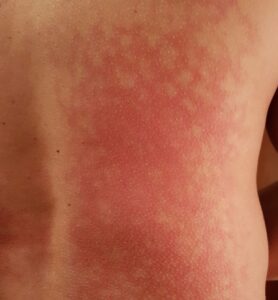
Together, these create a dusky, reddish-brown, or even purple “net” that follows the exact pattern of the blood vessels—the venous plexus—lying just under your skin. Notably, while the color changes, your skin will usually remain smooth, without the blistering or scaling seen in other rashes. However, you might feel a mild stinging, burning, or itching sensation in the area.
The location of the rash is a direct map to your heat source:
| Anatomical Location | Common Heat Source |
| Lower Back | Heating pads or hot water bottles used for chronic back pain. |
| Anterior Thighs | Laptops rested on the lap or proximity to space heaters. |
| Abdomen | Heating pads for GI issues (Crohn’s, pancreatitis, or cramps). |
| Posterior Thighs/Buttocks | Prolonged use of heated car seats. |
| Arms and Face | Exposure to ovens or open fires (e.g., bakers or glassblowers). |
While environmental factors are the cause, the condition is most common in individuals who have developed a deep habit of using heat for comfort.
3. Am I at Risk? (Identifying Risk Factors)
Erythema Ab Igne is often a “sentinel” sign—a signpost pointing toward an underlying issue that you may be trying to soothe with heat. If you find yourself reaching for a heating pad daily, it is important to ask what the heat is covering up.
Key risk groups include:
- Chronic Pain Sufferers: If you are managing back pain or internal conditions like Crohn’s disease or endometriosis, you may rely on heat for comfort. This frequent reliance can lead to unintended skin damage.
- Technology Users: Many modern cases involve people who rest hot laptops directly on their thighs for hours or use heated car seats during long commutes.
- Occupational Groups: Professionals like bakers, jewelers, and metalworkers who work near open flames or industrial heat sources are at higher risk.
- Elderly Individuals: If you use space heaters or electric blankets for extended periods because you feel cold easily, your skin may be receiving too much cumulative heat.
Can I Prevent This Condition?
The most effective prevention is habit awareness. Because EAI develops from heat that feels comfortable rather than painful, you might not realize damage is occurring. Awareness of how long and how often a heat source touches your skin is your best defense. If you must use heat, try using a timer or adding a thick layer of clothing between the source and your skin.
Identifying your risk is the first step; the second is taking active measures to resolve the condition.
4. How Can I Treat This at Home? (Self-Care and Non-Prescription Solutions)
The most powerful treatment for EAI does not require a prescription; it requires a change in your environment and habits.
Immediate Self-Care Steps
- Immediate and Complete Cessation: You must stop all exposure to the offending heat source immediately. This is the only way to allow the skin to begin the healing process.
- The “Blanch Test”: To see how far the condition has progressed, press a clear glass or your finger firmly against the rash. If the redness disappears and the skin turns white (blanches), the damage is likely temporary. If the color stays dark when pressed, the pigment has become “fixed.”
- Address the Root Cause: If you are using heat to manage pain, EAI may be a sign that your current pain control is inadequate. I encourage you to speak with your doctor about alternatives like physical therapy or different medications to address the underlying pain so you no longer need the heat.
Early-stage lesions can resolve completely over weeks or months once the heat is removed. However, if you continue to apply heat, the changes can become permanent, leading to “atrophy” (a thinning or wrinkling of the skin).
5. When to See a Doctor (Prognosis and Long-Term Health)
While EAI is usually a cosmetic concern that fades with time, long-term monitoring is essential. In some cases, abdominal EAI can be a “sentinel” for serious internal issues—such as pancreatitis or even internal tumors—because the heat is being used to mask deep, undiagnosed pain. If you are using heat on your stomach or back for persistent pain, please consult a primary care physician to rule out these internal causes.
Furthermore, there is a rare but serious risk if the skin is exposed to heat for decades. Over a long period, these areas can undergo a “malignant transformation” into skin cancers, including Squamous cell carcinoma, Merkel cell carcinoma, or Basal cell carcinoma.
Signs It Is Time to See a Dermatologist:
- The “Three-Month Rule”: The pattern has not begun to fade after three months of total heat avoidance.
- Texture Changes: The skin in the area feels thinner, indented, or has developed a “cigarette-paper” wrinkled texture.
- New Growth: You notice any bumps, sores, or crusting areas within the pigmented “net.”
- Cosmetic Distress: If the dark spots are persistent and bothering you, we can discuss prescription creams (like tretinoin or hydroquinone) or specialized laser treatments to help restore your skin’s appearance.
The prognosis is excellent if the heat is removed early. By acting now, you are giving your skin the best chance to recover fully.
6. Quick Reference: Key Terms to Know
- Erythema: A medical term for redness of the skin caused by increased blood flow.
- Reticulated: A pattern that looks like a net or a web.
- Hyperpigmentation: The darkening of an area of skin caused by the buildup of natural pigments (melanin and hemosiderin).
- Thermal Dermatosis: A skin condition specifically caused by exposure to heat or infrared radiation.
- Venous Plexus: The network of blood vessels just under the skin surface that creates the “net” shape of the rash.