
1. Introduction: Navigating Your Diagnosis with Confidence
Receiving a diagnosis of Herpes Simplex Virus (HSV) can feel overwhelming, yet it is a deeply common experience shared by millions. As a patient, your most powerful tool is education; understanding the clinical reality of the virus is the first step toward reducing the social stigma and regaining a sense of control over your health. By adopting a strategic approach to management, you can navigate this condition with confidence and minimize its impact on your daily life.

Podcast:
Learn More About Herpes Simplex Virus
To manage HSV effectively, it is essential to understand the two primary types of the virus:
- HSV-1: Historically associated with oral and facial infections, such as “cold sores” around the lips and nose. However, it is increasingly a cause of genital herpes, typically contracted through oral-genital contact.
- HSV-2: Primarily associated with the sacral, genital, and rectal areas. While it is usually transmitted through genital-to-genital contact, it can also cause oral infections through genital-oral contact.
Regardless of the type, the management principles remain the same, beginning with a clear understanding of the virus’s unique life cycle.
2. What Causes Herpes Simplex? Understanding the Viral Cycle
Understanding the etiology—the underlying cause and developmental process—of HSV is fundamental to effective care. HSV is highly infectious and spreads through direct contact with an infected person’s skin, mucous membranes, sores, or bodily fluids such as saliva, semen, and vaginal discharge.
The virus is characterized by a unique cycle that allows it to persist in the body for life:
- Latent State: After the initial (primary) infection, the virus does not disappear. Instead, it enters a dormant state within nerve cells. For oral infections, it resides in the trigeminal nerves of the face. For genital or rectal infections, it retreats to the sacral plexus, a network of nerves in the pelvis.
- Recurrence and the Dermatome: During a recurrence, the virus travels back along the nerve pathway to the skin. Because the virus follows a specific dermatome—an area of skin served by a single spinal nerve—recurrences often appear in the same specific location every time.
A key challenge in managing transmission is asymptomatic viral shedding. This occurs when the virus is released from the skin or mucous membranes even when no visible sores are present. While transmission is considerably more likely during an active outbreak with visible lesions, shedding means the virus can still be spread from seemingly healthy tissue. Understanding the biology of how the virus remains dormant allows us to better identify the specific factors that can coax it back into an active state.
3. Who Is at Risk and How Can Outbreaks Be Prevented?
Identifying your personal triggers is a strategic way to maintain a high quality of life. While the virus remains in the body, you have significant agency in managing your environment and physical health to prevent the virus from reactivating.
Common Triggers for Outbreaks
Outbreaks occur when the immune system’s ability to keep the virus in a latent state is temporarily compromised. Patients should monitor for:
- Physical Stressors: Fever, upper respiratory infections, or a general weakened immune system.
- Environmental Factors: Excessive ultraviolet (sun) exposure or physical trauma to the affected skin area.
- Physiological Changes: Hormonal fluctuations or high levels of emotional stress.
Reducing the Risk of Transmission
Preventing the spread of the virus to others or to new areas of your own body (inoculation) is a clinical priority. You can reduce risk by:
- Avoiding Contact During Outbreaks: Refrain from kissing or sexual activity from the moment you feel early symptoms until the skin has completely healed.
- Using Barrier Protection: Consistent use of condoms or dental dams during sexual activity significantly reduces the risk of transmission, even during periods of asymptomatic shedding.
- Protecting Skin Integrity: Minor injuries can provide an entry point for the virus; maintaining healthy skin and practicing caution with minor abrasions is advised.
Once you are familiar with the factors that initiate a recurrence, it becomes easier to recognize the clinical signs that an active outbreak is beginning.
4. Recognizing the Signs: The Typical Course of an Outbreak
Early detection during the “prodromal phase” is the key to managing discomfort. Many patients experience a localized warning sensation of itching, tingling, or burning before any visible changes occur. Recognizing these early signs allows for faster intervention and helps prevent accidental inoculation to new sites.
The 10-Day Healing Timeline
When an outbreak occurs, it typically follows a structured progression:
| Stage | Day(s) | Clinical Description |
| Prodromal | 0–1 | Vague early symptoms: tingling, itching, or burning in the dermatome. |
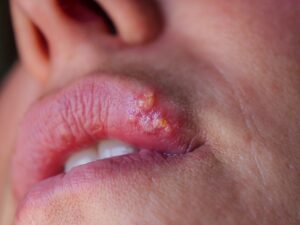
| Vesicle Formation | 1–2 | Clusters of small, fluid-filled blisters (vesicles) on a red (erythematous) base. |
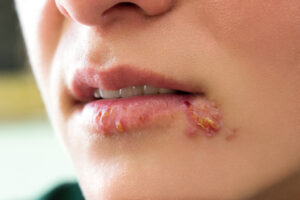
| Rupture | 3–4 | Vesicles burst, releasing fluid and leaving shallow, painful ulcers. Highly contagious. |
| Crusting | 5–7 | Sores dry out and form a scab. Crusting is minimal in moist mucosal areas. |
| Resolution | 7–10 | Resolution phase: Skin or mucosa returns to normal with no scarring. |
Clinical Appearance
An active outbreak typically presents as clusters of small vesicles that may be clear or contain blood. These are most common on the lips or genitals, but can also appear on the sacrum, the fingers (herpetic whitlow), or any area of the skin in athletes with frequent skin-to-skin contact (herpes gladiatorum). Recognizing these patterns is the first step toward effective self-care.
5. Managing Symptoms: Non-Prescription Care and Self-Care Strategies
For limited or mild eruptions, you can exercise significant agency in managing your symptoms at home. Supportive actions include:
- Early Recognition: Use the prodromal tingling as a signal to reduce stress and avoid sun exposure.
- Strict Hygiene: Wash hands immediately after any contact with a sore to prevent spreading the virus to new sites on your body.
- Monitoring Healing: Observe the area until the resolution phase is complete and the skin has returned to its normal state.
When to Seek Professional Help
While many outbreaks are manageable, certain clinical signs require a professional consultation:
- Diagnostic Testing: If you require a definitive diagnosis, ask your provider for a PCR swab (using a dacron or nylon swab, not cotton). PCR is the gold standard for accuracy in detecting active infection.
- Eye Involvement: If you experience pain or sores near the eyes, seek an immediate referral to an ophthalmologist to rule out Herpes Keratitis, which can impair vision.
- Severe Complications: Individuals with atopic dermatitis (eczema) who develop widespread, “punched-out” ulcers may have Eczema Herpeticum, a serious condition requiring urgent care.
- Medical Management: For frequent or severe recurrences, a provider may prescribe antiviral medications (Valacyclovir, Acyclovir, or Famciclovir) for either episodic or chronic suppressive therapy.
With these management tools in place, the long-term outlook for living with HSV is excellent.
6. Looking Ahead: Living and Aging with HSV
The long-term prognosis for those living with HSV is very positive. While it is a lifelong infection, it is a highly manageable condition that tends to become less disruptive over time.
As you age, the frequency and severity of outbreaks typically decrease as your immune system settles into a stable relationship with the virus. Additionally, those with genital HSV-1 often find they experience significantly fewer recurrences than those with genital HSV-2.
The most important takeaway is that while there is currently no cure, the virus is a manageable part of your health history, not a definition of your future. We encourage you to maintain an open, honest dialogue with your healthcare provider to ensure your care plan evolves with you through every stage of life.